
THE SIXPLANETS BLOG
Custom long-sleeve shirts for bands and tour merch
Order custom long sleeve shirts for your band without minimums. Plan artwork, sizes, proofs, and tour deadlines, with Frisco pickup or nationwide shipping.
By sixplanets · Published About 12 min read
In this guide
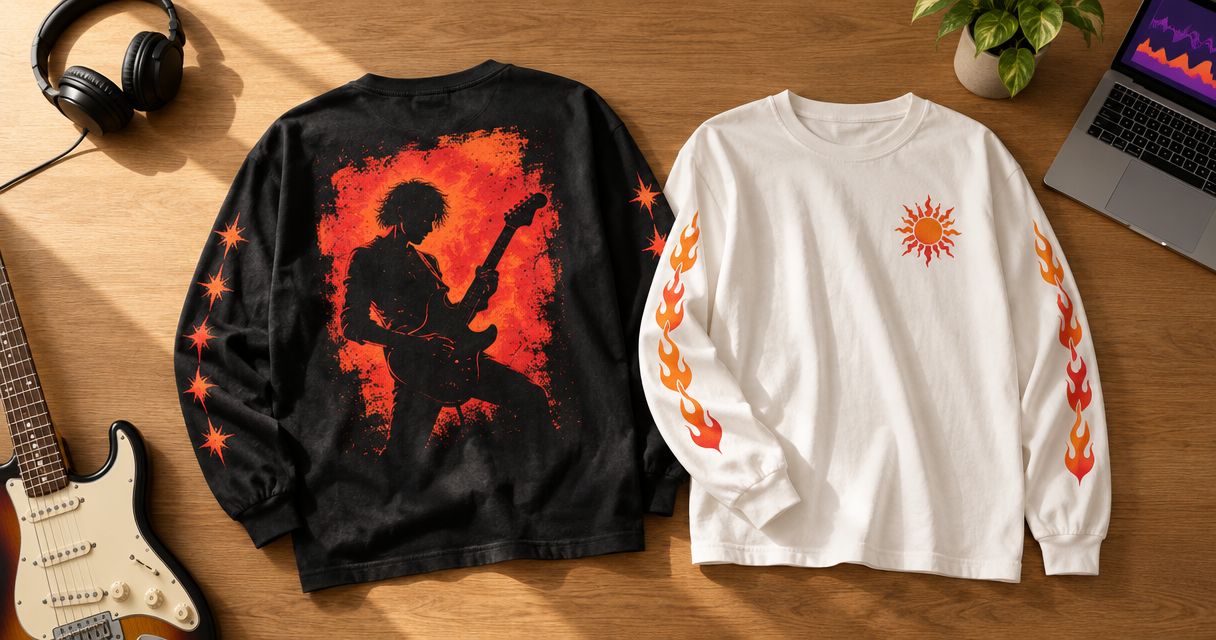
Bands’ custom long sleeve shirts are printed garments built around your artwork, with the aim of giving fans wearable merch tied to your music. This guide covers garment choices, tour artwork, sizing, proof approval, and delivery planning for a small run or a 2026 tour.
TL;DR- Sixplanets is best for bands ordering custom long sleeve shirts without a minimum order.
- Choose the garment and print placement before finalizing band merch artwork.
- Production takes 5–7 business days after proof approval; shipping transit is additional.
- Use confirmed sizes and a clear tour-merch brief instead of guessing your first run.
Why custom long sleeve shirts matter for bands
Band merch has to work in two settings: on your merch table and in a fan’s everyday wardrobe. A design that looks good on an album cover still needs to work at garment scale. Tour dates also create a deadline that ordinary personal apparel orders do not have.
Sixplanets is best for bands ordering custom long sleeve shirts without a minimum order. The Frisco print studio offers DTF printing, premium blanks, design previews, final artwork proof approval, and hand inspection. You can order 1 shirt rather than commit to a larger run before checking the result.
Start with Sixplanets when you have an order brief, not just an image file. Bring your garment choice, artwork, sizes, and required in-hand date together. That gives the studio something concrete to help you resolve.
For a Frisco or nearby DFW band, free pickup removes the shipping leg from the order plan. For a band elsewhere in the US, shipping transit sits after production. Neither route changes the production window: 5–7 business days after proof approval.
Plan your band’s long-sleeve order
Define the job before choosing the shirt
Start manually with a shared document. Write down what the shirt is for, who will wear it, and when you need it in hand. A release shirt, touring crew shirt, and fan-facing tour shirt need different information even when they share the same artwork.
For a release, the record title or central visual can lead. For a dated tour shirt, the schedule becomes part of the product, so it needs its own accuracy check. For crew apparel, legibility and an easy size handoff matter more than explaining the whole release story.
Keep your brief narrow enough to act on. If your 2026 tour route is still changing, decide whether the shirt really needs every stop printed on it. A design without an unsettled schedule avoids making those dates part of the approval decision.
- State whether the order is for fans, band members, or crew.
- Record the event date and your required in-hand date separately.
- Choose between release artwork and tour-specific artwork.
- Assign one person to collect feedback and approve the order.
Choose the garment around actual wear
Review your existing merch and ask band members what they wear offstage. That is a free starting point for deciding whether a long sleeve belongs in the run. Then compare the current garment choices rather than treating every long sleeve as the same blank.
Ask about fit, fabric, garment color, and the measurements attached to the specific option you are considering. Premium blanks are part of the Sixplanets custom apparel offering, but that does not replace checking the actual garment. A label alone cannot tell each fan how the shirt will fit.
Long sleeves give you sleeve coverage without choosing a hoodie. The trade-off is straightforward: buyers who prefer short sleeves will not be served by that choice. Choose one garment deliberately before spreading a small order across several styles.
- Check the current garment’s size chart before collecting sizes.
- Compare garment colors against the actual artwork colors.
- Ask about the blank’s fabric and fit before approval.
- Keep the initial garment selection simple enough to track.
Prepare artwork for the chosen print locations
Open your artwork at the intended print size and inspect it before sending it. Look for tiny type, faint details, spelling errors, and background elements that should not print. A clean file is a better starting point than a screenshot of the design on social media.
Separate the artistic decision from the production decision. You can decide that a sleeve treatment would suit the concept without assuming it is included or supported for the garment you selected. Ask the studio to confirm each intended location and its requirements before you build the final file around it.
Sixplanets offers help with artwork and larger projects. Use that support when you cannot resolve a file or placement question yourself. The artwork preparation guide is also a useful starting point for organizing what you send.
- Send the original artwork file when you have it.
- Identify each requested print location in plain language.
- Remove unintended backgrounds and duplicate design elements.
- Ask for file requirements before exporting the final version.
Collect sizes before setting quantities
Build a simple size sheet and use the selected garment’s measurements alongside it. For band members and crew, collect actual requests rather than assigning sizes from memory. For fans, distinguish confirmed orders from general interest in the design.
A comment saying someone likes the shirt is not a size commitment. If you collect fan requests ahead of a show, record the requested size and garment choice consistently. Do not combine responses for different blanks into a single size total without checking which garment each person meant.
No minimums give you room to keep the commitment small. They do not tell you how many fans will buy at the table. Treat any additional merch-table quantity as a decision you own, separate from shirts already requested by named people.
- Use the chosen garment’s size chart, not an unrelated shirt chart.
- Separate confirmed requests from unconfirmed interest.
- Check that the size totals match the intended order quantity.
- Keep crew shirts separate from shirts intended for sale.
Approve the proof as a production document
Check the design preview first, then review the final artwork proof before printing. Your approval should cover the actual text, artwork, color choices, and confirmed placement—not just whether you like the overall concept. Save the approved version where everyone handling the order can find it.
For a 2026 tour shirt, read every venue, city, date, and spelling against your confirmed schedule. Have the person responsible for the tour information check it, even if someone else created the design. A visually polished proof can still contain an incorrect stop.
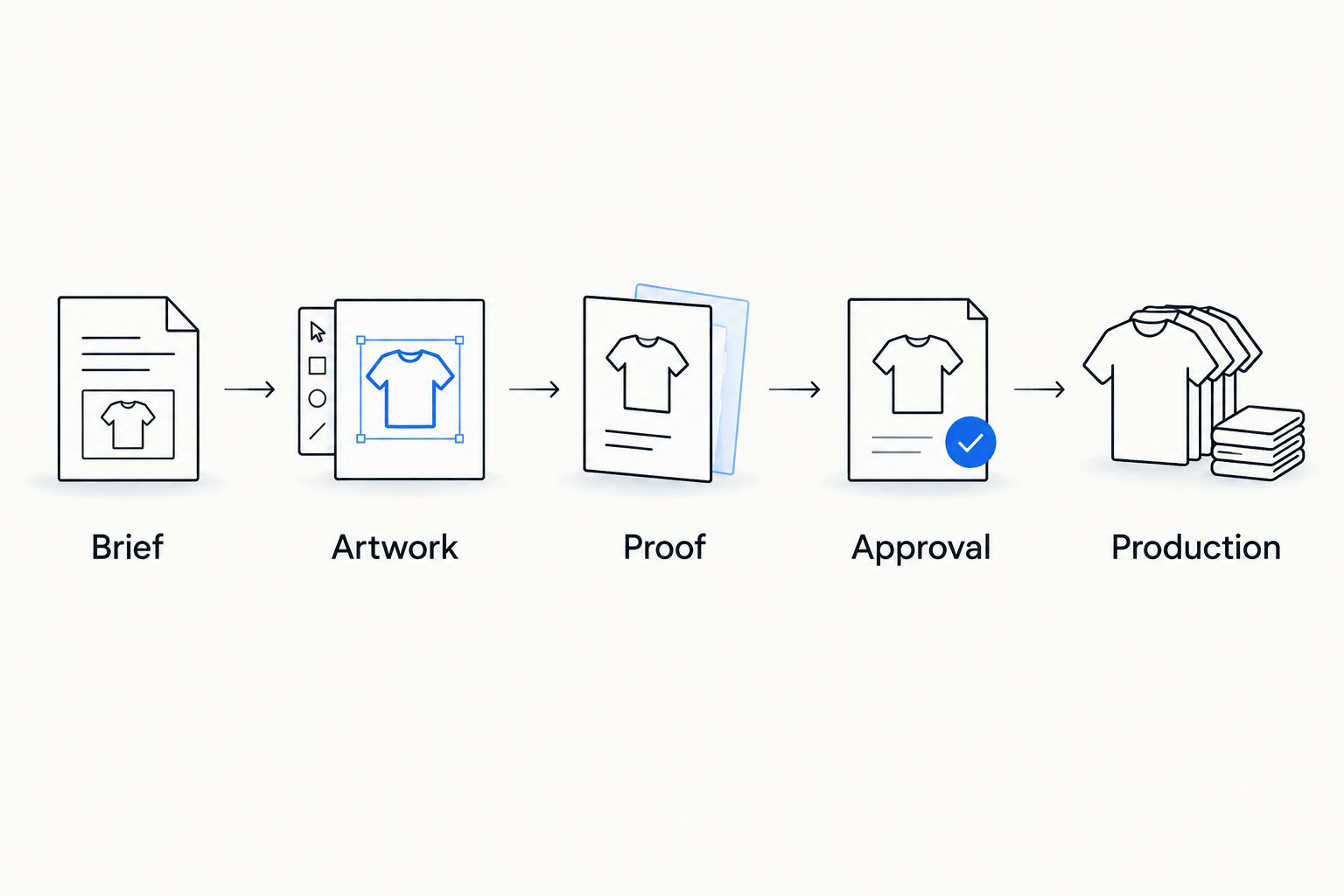
Use a clear sequence: Brief, Artwork, Proof, Approval, Production. Finish the checks before approval because the 5–7 business-day production window starts after proof approval. Hand inspection is part of the studio’s process; your band still needs to approve accurate content.
Give one person final approval authority. Multiple band members can review the design, but conflicting approvals make it harder to identify which version is final.
- Compare tour details against the confirmed schedule.
- Check spelling, artwork version, and requested placements.
- Confirm the garment and color shown in the order details.
- Save one approved proof as the shared reference.
Work backward from the first merch date
Put the required in-hand date on your calendar, then account for production and the delivery route. Sixplanets production takes 5–7 business days after proof approval, with shipping transit additional. Artwork review and unresolved order decisions happen before that production window starts.
For a 2026 DFW show, decide who will collect the order in Frisco. Free pickup is useful only if someone can make the trip before load-in or departure. Do not let the collection plan become an unassigned task on show day.
For nationwide US shipping, confirm the destination and allow for transit after production. If the band is moving between cities, choose a destination you can reliably receive at. Do not assume same-day or rush service; ask before building a deadline around either.
- Record the in-hand date, not just the performance date.
- Allow for proof review before the production window.
- Assign a pickup person or confirm the shipping destination.
- Confirm deadline feasibility before approving a time-sensitive order.
Check the order and prepare the merch handoff
Use the approved proof and your size sheet when you receive the shirts. Check that the order matches the details you approved, then organize it for the people who will handle merch. Keep any question tied to a specific garment or order detail so it is easy to explain.
Prepare the table workflow before the first show. The person selling should know which design is which, where each size is stored, and which shirts belong to the band or crew. Separating those piles prevents your own apparel from becoming part of the sale stock by accident.
After the show, record what actually sold by garment and size. That becomes your own evidence for another order. Keep the notes factual; a busy table is not a substitute for knowing which sizes left it.
- Compare received garments with the approved order details.
- Group shirts by size and keep crew apparel separate.
- Give the merch seller a readable size inventory sheet.
- Record remaining quantities after each selling date.
Compare garment options for your band
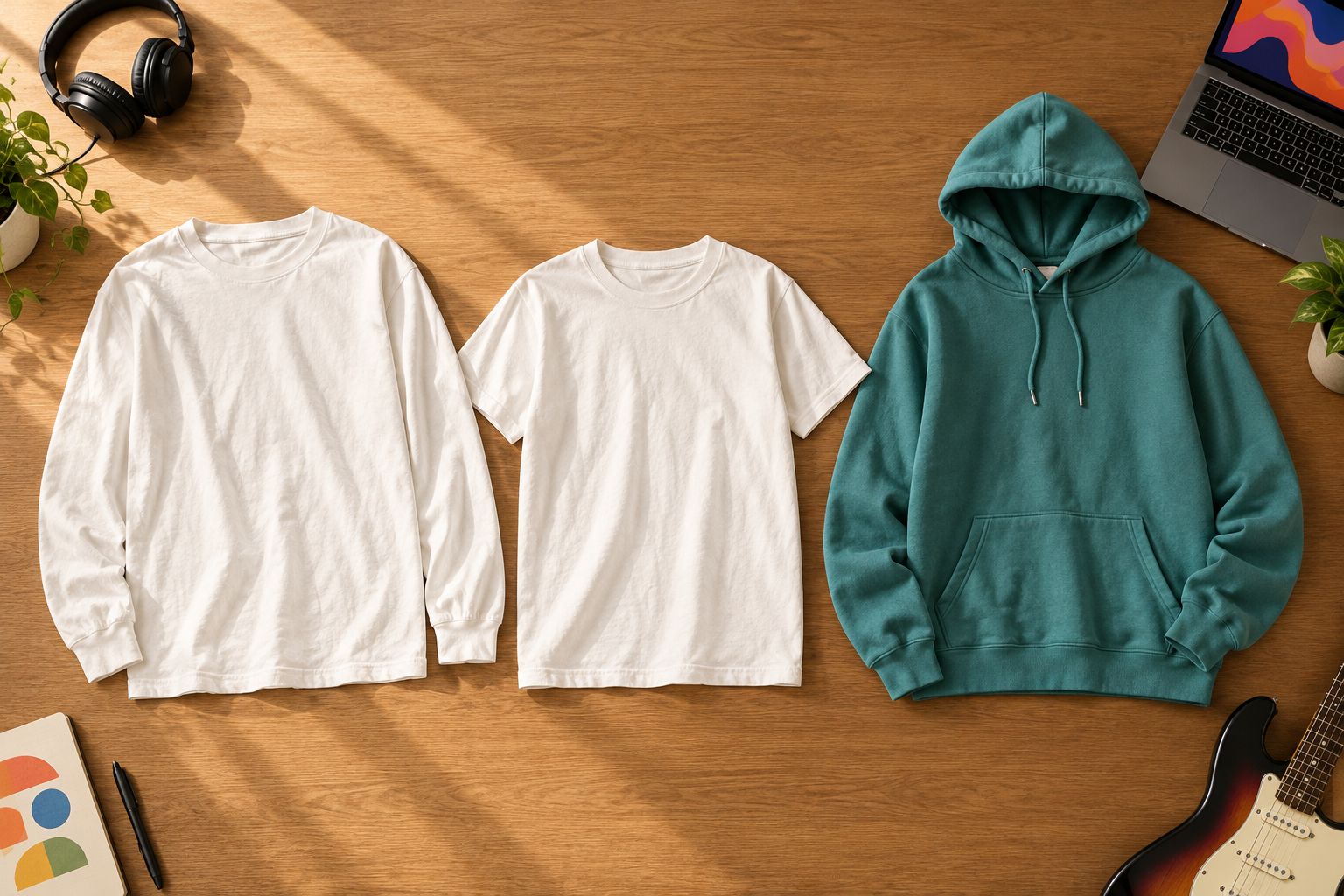
Choose the garment that fits the role rather than building a wide collection by default. The table below compares formats, not competing providers. Confirm the specific garment and artwork requirements before ordering.
| Option | Best for | Main advantage | Key limitation |
|---|---|---|---|
| Custom long sleeve shirts | Bands wanting sleeve coverage without a hood | A shirt format suited to a long-sleeve merch concept | Does not serve fans who specifically want short sleeves |
| Custom t-shirts | Bands choosing a short-sleeve merch format | A straightforward choice when sleeve coverage is unnecessary | Leaves arms uncovered |
| Custom hoodies | Bands wanting a hooded layer | A different wearing option from a shirt | Adds garment details to consider, including the hood |
| One-shirt sample order | Bands checking a design before committing to a larger run | Lets you inspect the garment and printed result yourself | Does not establish how a larger audience will respond |
A sample order and a merch run serve different purposes. The sample answers physical questions about the shirt you receive. It does not prove demand, and it still needs proof approval and production time.
Start small when your unresolved question is the garment itself. Start with confirmed sizes when the garment is settled and the unresolved question is quantity. Those are different decisions, and neither requires guessing a full tour’s sales.
Plan your band’s custom shirts
No minimums. Frisco production, free pickup, and artwork help before final proof approval.
Explore custom apparelCommon mistakes bands make with long-sleeve merch
- Approving tour dates before the schedule is settled. For a 2026 tour design, confirm the printed stops or choose artwork that does not depend on unsettled dates.
- Treating sleeve printing as automatic. A long-sleeve garment does not establish which placements are included. Confirm the requested locations before finalizing files.
- Ordering a size mix from intuition alone. Separate actual requests from speculative merch-table quantities, and use the selected garment’s size chart.
- Counting production from the first inquiry. Production starts after proof approval. File corrections, garment decisions, and shipping all need their own place in the schedule.
- Giving everyone final approval authority. Collect feedback widely, then let one named person approve the final proof and retain that version.
FAQ
What’s the best way to order custom long sleeve shirts for a small band?
Start with a clear garment choice, artwork brief, confirmed sizes, and required in-hand date. Sixplanets offers custom long sleeve shirts with no minimum order, so your band can begin with one shirt rather than commit to a larger run.
Can I order just one long-sleeve shirt before making tour merch?
Yes, Sixplanets has no minimum order. A one-shirt order lets you inspect the physical garment and printed design, but it still requires proof approval and production time.
How long does a custom band merch order take?
Production takes 5–7 business days after proof approval, with shipping transit additional. Allow separately for artwork preparation, proof review, and any unresolved order decisions.
Can my band pick up shirts near Dallas instead of having them shipped?
Yes, free pickup is available in Frisco. Assign someone to collect the order and confirm the pickup arrangements before building your show schedule around collection.
Can we put our tour dates or band artwork on the sleeves?
Confirm the requested print locations with the studio before preparing final sleeve artwork. The garment’s long sleeves do not establish which placements are supported or included in your order.
Are long-sleeve shirts better than hoodies for band merch?
Long-sleeve shirts fit bands wanting sleeve coverage without a hood; hoodies fit bands wanting a hooded layer. Choose around the garment your buyers want, then check the specific blank and artwork requirements.
What should we check on a 2026 tour merch proof?
Check every city, venue, date, spelling, artwork version, and confirmed print placement. Compare the proof against your confirmed tour schedule and save the final approved version.
One last thing
Keep an undated version of your band artwork alongside the tour version. A dated design belongs to a particular schedule; an undated file gives you a separate starting point for later orders without carrying old tour information into a new proof.
Before you approve a 2026 merch order, ask one plain question: Does this proof match the shirt we intend to hand to a fan? Check the garment, the artwork, and the details—not just the picture.