
THE SIXPLANETS BLOG
How to plan band merch sizes for a small gig
Plan custom band merch sizes from confirmed requests, check the exact garment fit, and build your small-gig order around artwork approval and Frisco pickup.
By sixplanets · Published About 12 min read
In this guide
Plan custom band merch sizes for a small gig by collecting size requests, checking the exact garment’s size chart, and separating confirmed orders from shirts you intend to sell at the show. Keep that second group small enough to carry home unsold, and schedule production from final artwork proof approval—not from the day you start designing.
TL;DR- Plan custom band merch from confirmed size requests, not an assumed audience size mix.
- Sixplanets offers no-minimum custom apparel for bands that want a small merch run.
- Check the selected blank’s measurements before fans confirm their band shirt sizes.
- Production takes 5–7 business days after proof approval; shipping transit is additional.
Why this matters
A small gig does not give you a reliable size forecast by itself. Attendance tells you who came through the door, not who wants your design, which fit they prefer, or which size they will choose.
Sixplanets is best for bands that need custom band merch without a minimum order. That removes the need to fill a minimum quantity, but you still need to choose a garment, collect sizes, and approve the artwork. For a 2026 release, start with the decisions in the custom band merch guide for a first small run, then build your size sheet around actual requests.
The goal is not a perfectly predicted merch table. It is an order you understand: who each reserved shirt belongs to, which sizes remain for walk-up buyers, and what you will do with anything left after the gig.
How to plan band merch sizes for a small gig
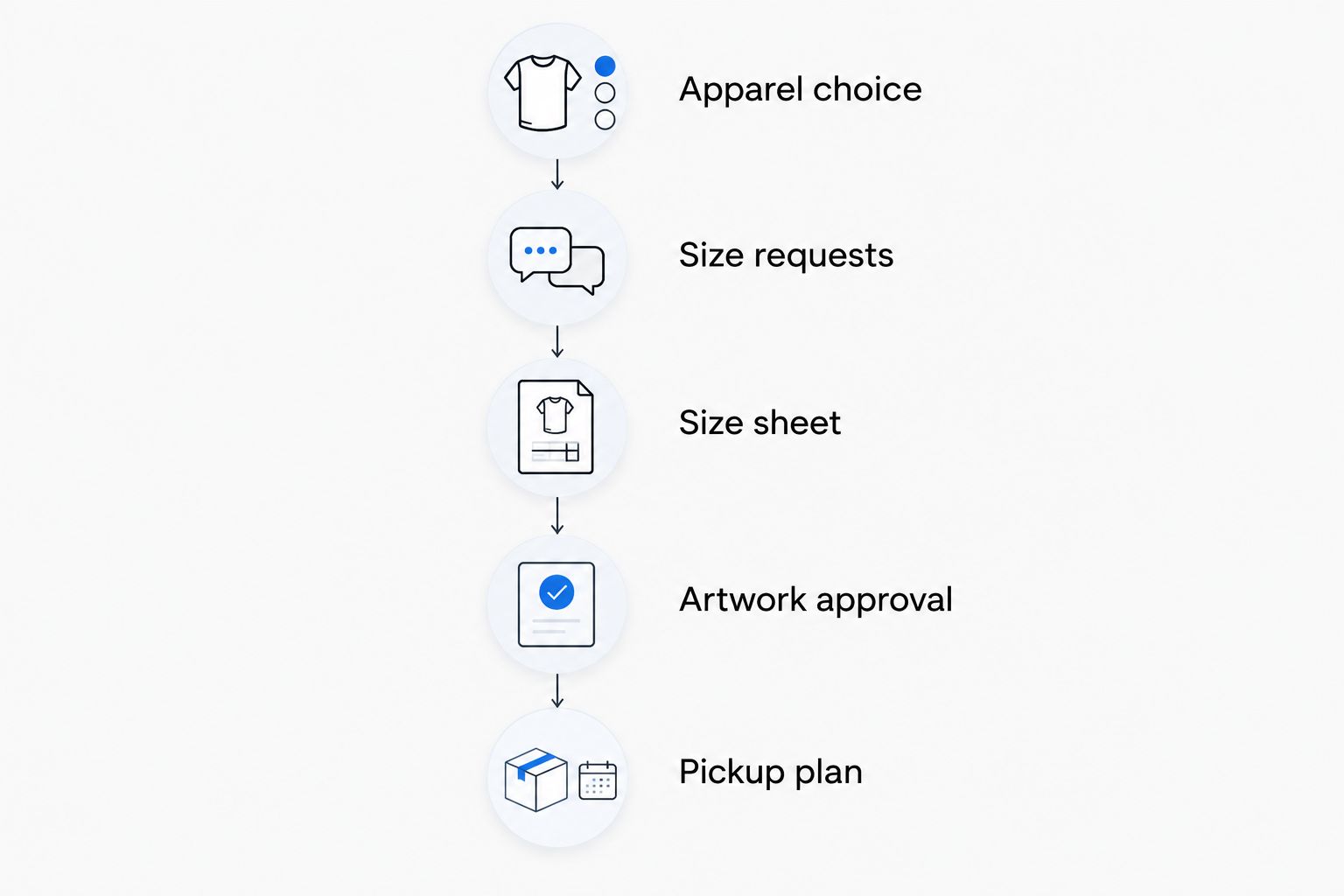
Use this sequence before placing your order. Choose the garment before collecting final sizes, because a size label alone does not tell a fan how that particular shirt fits.
Apparel choice
Start with the garment you want fans to wear. Decide whether the first run is a t-shirt run or another apparel format, then settle the blank and garment color before asking for final size commitments.
Premium blanks still need a fit check. The word premium does not tell you whether a garment’s measurements match a fan’s favorite shirt. Share the selected garment’s size chart rather than treating every medium as interchangeable.
Keep the first order easy to explain. If you offer different garments, maintain a separate size sheet for each so a hoodie request cannot become a t-shirt order by mistake.
Size requests
Ask interested fans for their preferred size using the chosen garment’s chart. Collect a name or contact identifier alongside the request so you can distinguish a confirmed order from an anonymous expression of interest.
Make the status explicit. Someone saying they like the artwork is not the same as someone confirming that they want a shirt in a specific size. Your list should show which requests are firm and which still need an answer.
If you already sell merch, review your own records. Use the garment, size, and sales context together; a previous order for a different fit is not a direct template for this run.
Size sheet
Create a working sheet with these fields:
- Garment and color.
- Size label from the selected blank.
- Confirmed buyer or reservation.
- Extra shirts intended for the merch table.
- Total shirts to order in that size.
- Notes requiring confirmation.
Add confirmed requests and table extras separately, then combine them for the final order. This gives you a clear reason for every shirt without pretending your unconfirmed demand is known.
Do not hide unresolved sizes inside a total. Follow up with the buyer, or leave that request out of the approved order until it is settled.
Artwork approval
Review the design preview and final artwork proof before printing. Check spelling, the intended garment color, and the shown print placement—not just whether the artwork looks familiar.
A final artwork proof approves the design for printing. Your size sheet serves a different purpose: it confirms the garment quantities and sizes. Keep both decisions visible so a correct design does not distract you from an incorrect order breakdown.
Finish any artwork questions before approving production. Help with artwork and larger projects is available, so ask for that help while the order is still being planned.
Pickup plan
Decide how the finished order will reach the merch table. For a Frisco or nearby DFW gig, plan around local pickup; for an order shipped elsewhere in the US, include shipping transit in the schedule.
Tell the person collecting the order what belongs to reserved buyers and what belongs on the table. Keep that distinction when packing for the venue, not just in the spreadsheet.
Confirmed orders or shirts for the merch table?
For a small 2026 gig, these are different kinds of demand. Confirmed orders have a named buyer and an agreed size; shirts for the table depend on purchases that have not happened yet.
| Order approach | Best for | Advantage | Limitation |
|---|---|---|---|
| Confirmed size requests | Bands with fans ready to commit | Each shirt has a known intended buyer and size | Fans must respond before you finalize the order |
| Extra shirts for the table | Bands planning for walk-up buyers | Gives you shirts to offer during the gig | The size mix is unconfirmed, and unsold shirts remain your responsibility |
| Confirmed requests plus table extras | Bands serving both groups | Keeps known demand separate from your discretionary order | Requires clear records and separate handling at the show |
Base the order on confirmed requests first. Add table extras only after deciding what leftover garments you are prepared to keep.
This is a planning choice, not a promise that every reserved buyer will collect their shirt. Agree on collection arrangements before the gig, and keep a contact record for each reservation.
How do you choose sizes without previous merch sales?
Ask the people who have already shown interest in the release. Share the design, identify the garment, and request a size selected from its chart. You do not need to turn a small gig into a market survey; you need a clear answer from likely buyers.
Avoid copying a generic size ratio into your first order. It does not describe your audience, and it cannot account for the fit of the blank you selected.
If responses are sparse, make the decision visible: reduce the unconfirmed part of the run, gather more requests, or proceed knowing that those extra shirts are a judgment call. Do not label a guess as a forecast.
For a 2026 debut show, an honest size sheet is more useful than a confident-looking percentage breakdown. Write down what is confirmed, what is undecided, and what you are choosing to order anyway.
Should you order a sample before the full run?
Order a sample when fit or artwork placement is still unresolved. Sixplanets has no minimum order, so you can order just 1 shirt instead of committing to a larger quantity to inspect the result.
A sample gives you a physical garment to assess. Check how it fits the intended wearer, how the chosen color works with the artwork, and whether the placement suits the design.
The limitation is timing: a sample is an order, not an instant preview. If you want to inspect it before approving another run, allow time for that sequence rather than assuming both orders can finish together.
A sample also cannot tell you every fan’s size. Use it to answer garment and design questions, then use the size chart to collect individual requests. The guide to ordering custom t-shirts with no minimum explains the small-order approach.
Why your band merch size mix varies
Your size mix follows the people ordering and the garment they choose. These factors belong in the planning sheet:
- The selected blank. Use its measurements rather than transferring sizes from a different garment.
- Preferred fit. Ask fans to choose using the chart, especially when they want a looser or closer fit.
- Confirmed interest. Separate actual size commitments from likes, comments, and general enthusiasm.
- Your own sales history. Identify whether past requests involved the same garment and a comparable audience.
- Garment format. Keep requests for different apparel types separate instead of combining identical size labels.
- Your leftover plan. Decide whether unsold shirts will serve future shows or become inventory you do not want.
None of these factors produces a universal size split. Together, they explain why your order looks the way it does—and which parts still depend on judgment.
How long before the gig should you finalize the order?
Sixplanets production takes 5–7 business days after final artwork proof approval, with shipping transit additional. Free pickup is available in Frisco, where production is local; pickup removes the shipping leg, not the production period.
For your 2026 gig calendar, mark the show date, intended collection date, and proof approval deadline separately. Leave room before approval for size follow-ups, artwork help, and any changes you want to make.
Do not treat 5 business days as a guaranteed collection date. Plan around the stated 5–7 business-day production window and confirm the order’s schedule before committing to a show deadline.
If you need delivery outside DFW, account for shipping after production. Do not promise fans a collection date based only on when you submitted the artwork, and do not assume same-day or rush service.
Start your small merch run
No minimums. Local Frisco production, free pickup, and final artwork proof approval before printing.
Plan your orderWhat if fans want sizes you did not order?
Record the requested size and a way to contact the buyer. That gives you useful information for a later order without pretending a shirt at the table will fit when it does not.
Keep this list separate from sales already completed. A request helps you plan, but it is not a sale until the buyer commits under the arrangements you have agreed.
No minimums let you plan a smaller follow-up order. They do not make production immediate, so discuss timing before promising collection after the show.
Should you offer every garment in the first run?
Keep the launch focused if you are still learning what fans want. Different garments mean separate fit decisions, size requests, and order records; adding options does not remove those tasks.
If fans specifically request another apparel format, record that interest separately. Choose whether it belongs in this order or a later release rather than expanding the run simply to make the table look fuller.
For a 2026 first release, clarity helps buyers act. Show them the actual garment choice, the design, and the sizing information they need to commit.
How do you keep sizes organized at the gig?
Pack reserved shirts separately from shirts intended for walk-up purchases. Label the reserved packages with the information needed to match them to the buyer, while keeping personal contact details out of public view.
Keep the size sheet accessible to whoever runs the table. When a shirt sells or a reservation is collected, update the record so the next person does not rely on memory.
After the gig, record what sold, what stayed unsold, and what people requested but could not buy. That is your starting evidence for the next run—not a borrowed size ratio.
FAQ
What’s the best way to plan custom band merch sizes for a small gig?
Start with confirmed size requests using the selected garment’s size chart. Keep extra shirts for walk-up buyers separate so you can see which part of the order is based on known demand.
How many shirts should my band order for its first gig?
Base the quantity on confirmed requests and the extra shirts you are prepared to keep if they do not sell. Gig attendance alone does not establish how many fans will buy or which sizes they need.
Can I order just one custom band shirt?
Yes. Sixplanets offers custom band merch with no minimum order, so you can order just 1 shirt. Use a sample to check the garment and design before committing to a larger run.
Should I use the same size mix for every t-shirt blank?
No. Collect sizes against the selected blank’s measurements rather than assuming that the same label means the same fit across garments.
How long does production take after artwork approval?
Production takes 5–7 business days after final artwork proof approval. Shipping transit is additional, so include it when planning an order for a gig outside the pickup area.
Can I pick up band merch in Frisco?
Yes. Free pickup is available in Frisco, where production is local. Plan collection around the production schedule rather than assuming pickup means immediate completion.
What should I check before approving my band merch artwork?
Check spelling, garment color, and the print placement shown in the final artwork proof. Confirm your size breakdown separately, because artwork approval and quantity planning answer different questions.
Does hand inspection replace ordering a sample?
No. Hand inspection and a sample serve different purposes. A sample lets you assess the garment’s fit and your design choices before committing to another order.
One last thing
Your best size record includes the shirts people asked for but could not buy. A sales list shows what left the table; a request list also captures demand your original size mix did not serve.
Sixplanets provides hand inspection, but your band supplies the buying context. Keep the confirmed order sheet and the post-gig notes together so the next custom apparel run starts with your audience’s requests, not a fresh guess.