THE SIXPLANETS BLOG
Best 7 blank hoodies for custom printing in 2026
Find the best blank hoodies for custom printing by fit, fabric and print placement. Choose a hoodie for band merch, staff orders or a single custom piece.
By sixplanets · Published About 11 min read
In this guide
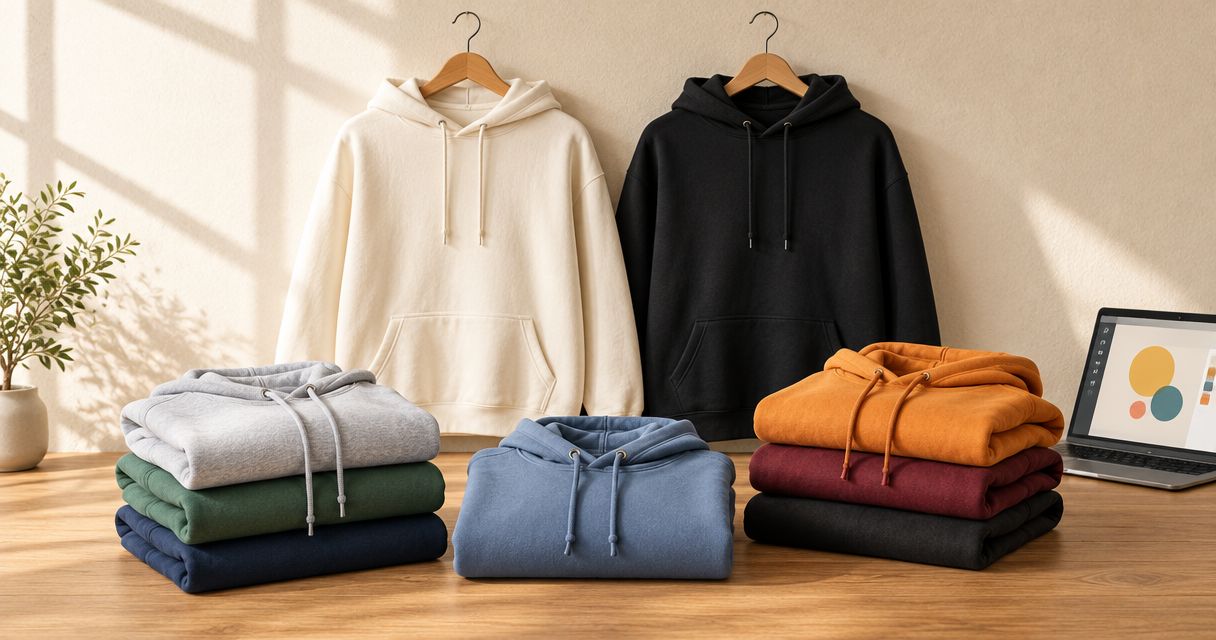
Best overall: a midweight pullover. Best for creator merch: a heavyweight pullover. Best for staff layering: a zip-front hoodie. The best blank hoodies for custom printing in 2026 match your artwork, fit and daily use—not just the fabric description.
TL;DR- A midweight pullover is the default among the best blank hoodies for custom printing.
- Sixplanets suits custom hoodie buyers who need no minimums, artwork help and Frisco pickup.
- Choose heavyweight blanks for substantial creator merch; choose lightweight blanks for easier layering.
- Approve the final artwork proof before production; allow 5–7 business days, plus shipping transit.
Why this matters
A hoodie is both a garment and a print surface. A blank that suits your artwork still needs to feel right when someone wears it to work, school or a show.
Sixplanets is best for custom hoodie buyers who want no minimums and local Frisco production. You can order just one through Sixplanets, review a design preview and approve the final artwork proof before printing. Premium blanks, hand inspection and free pickup support an order built around your design.
This guide ranks seven blank hoodie types by buying situation. Use the categories to narrow your brief, then confirm the exact garment, fabric composition, measurements and print placement before ordering.
What makes the best blank hoodies for custom printing?
For a 2026 order, judge the garment and the design together:
- Print surface: Look for a smooth exterior where the artwork will sit. Check the actual fabric, not just a cotton-related description.
- Usable print area: Keep the design clear of pockets, seams and zippers unless the proposed placement has been confirmed.
- Fit: Compare garment measurements with a hoodie you already like. A size label alone does not describe the silhouette.
- Weight and warmth: Pick fabric weight for how the hoodie will be worn, including indoor use and layering.
- Artwork compatibility: Review contrast, small lettering and placement on the selected garment color.
- Order process: Confirm proof approval, production timing and pickup or shipping before setting a deadline.
Blank hoodie choices at a glance
These 2026 picks are garment categories, not claims about specific manufacturer models. Each has a distinct job; some features can coexist in the same blank.
| Rank and blank type | Best for | Standout feature | Key limitation |
|---|---|---|---|
| 1. Midweight pullover | An undecided first order | Uninterrupted upper-front area | Hood and pouch pocket constrain placement |
| 2. Lightweight pullover | DFW layering | Less bulk under another layer | Less warmth than a heavier construction |
| 3. Heavyweight pullover | Creator merch built around substance | A heavier garment feel | More bulk for indoor wear |
| 4. Zip-front hoodie | Staff who add and remove layers | Opens without pulling over the head | Zipper divides the front print area |
| 5. Cotton-face fleece hoodie | Artwork-led selection | Cotton exterior on a fleece construction | Fiber description alone does not prove print suitability |
| 6. Relaxed-fit pullover | Band merch with a deliberate silhouette | Roomier proportions | Placement needs review on the wider shape |
| 7. Youth-fit hoodie | School and youth club orders | Youth-specific proportions | Adult artwork needs a separate placement review |
1. Midweight pullover: best for a first custom hoodie order
A midweight pullover is the practical starting point when you want a familiar hoodie without choosing an especially light or heavy construction. Its upper front has no zipper dividing the artwork area.
Start here for a one-off design, a small business hoodie or an initial merch sample. Confirm what “midweight” means for the selected blank; the label is not a substitute for its fabric specification.
Midweight pullover pros:
- Gives you an uninterrupted upper-front area.
- Works as a starting brief for individual and group orders.
- Lets the artwork lead without requiring a specialized silhouette.
Midweight pullover cons:
- A pouch pocket limits lower-front placement.
- The hood needs consideration when positioning a back design.
Best for: Buyers who want a straightforward first custom hoodie.
Verdict: Buy a midweight pullover as your default, then confirm the exact fit.
2. Lightweight pullover: best for DFW layering
A lightweight pullover prioritizes less bulk rather than a substantial fleece feel. Choose it when your hoodie needs to fit beneath another garment or move between indoor and outdoor use around Frisco and DFW.
Keep the distinction clear: lightweight describes the garment, not a guaranteed cooling or moisture-management feature. Check the actual material and construction before assigning it to active staff or an outdoor event.
Lightweight pullover pros:
- Adds less bulk beneath another layer.
- Suits buyers who dislike a heavy hoodie feel.
- Keeps a pullover front free of a center zipper.
Lightweight pullover cons:
- Provides less warmth than a comparable heavier construction.
- Does not deliver the substantial feel a heavyweight merch brief calls for.
Best for: Local buyers prioritizing layering over warmth.
Verdict: Buy a lightweight pullover when lower bulk is the goal.
3. Heavyweight pullover: best for substantial creator merch
A heavyweight pullover makes the garment's weight part of the merch decision. Choose it when a substantial feel belongs in the brief, rather than treating heavier fabric as an automatic sign of better printing.
For a creator release in 2026, evaluate the fit and artwork together. A heavy garment with the wrong proportions is still the wrong blank, and extra fabric weight does not resolve unclear lettering or awkward placement.
Heavyweight pullover pros:
- Gives the finished garment a heavier feel.
- Suits a merch concept centered on substantial apparel.
- Retains an uninterrupted upper-front print area.
Heavyweight pullover cons:
- Adds bulk for indoor wear and layering.
- Requires a fit decision beyond simply choosing a heavier fabric.
Best for: Creators who specifically want a substantial hoodie.
Verdict: Buy heavyweight for garment feel—not as a shortcut to print quality.
4. Zip-front hoodie: best for staff layering
A zip-front hoodie opens without being pulled over the head. That makes it a useful choice for staff who repeatedly put on and remove a layer during the workday.
The zipper changes the artwork plan. Instead of assuming a centered pullover graphic will transfer unchanged, consider a chest placement or a back design and confirm the usable area.
Zip-front hoodie pros:
- Opens at the front for easy layer changes.
- Supports a chest-logo approach to staff apparel.
- Gives you an alternative to a large front graphic.
Zip-front hoodie cons:
- The zipper interrupts the center front.
- A back design still needs to account for the hood.
Best for: Local business teams prioritizing easy layer changes.
Verdict: Buy a zip-front hoodie for function; rethink the artwork around the zipper.
Use the guide to choosing print locations for a custom hoodie before settling on front, chest or back artwork.
5. Cotton-face fleece hoodie: best for artwork-led selection
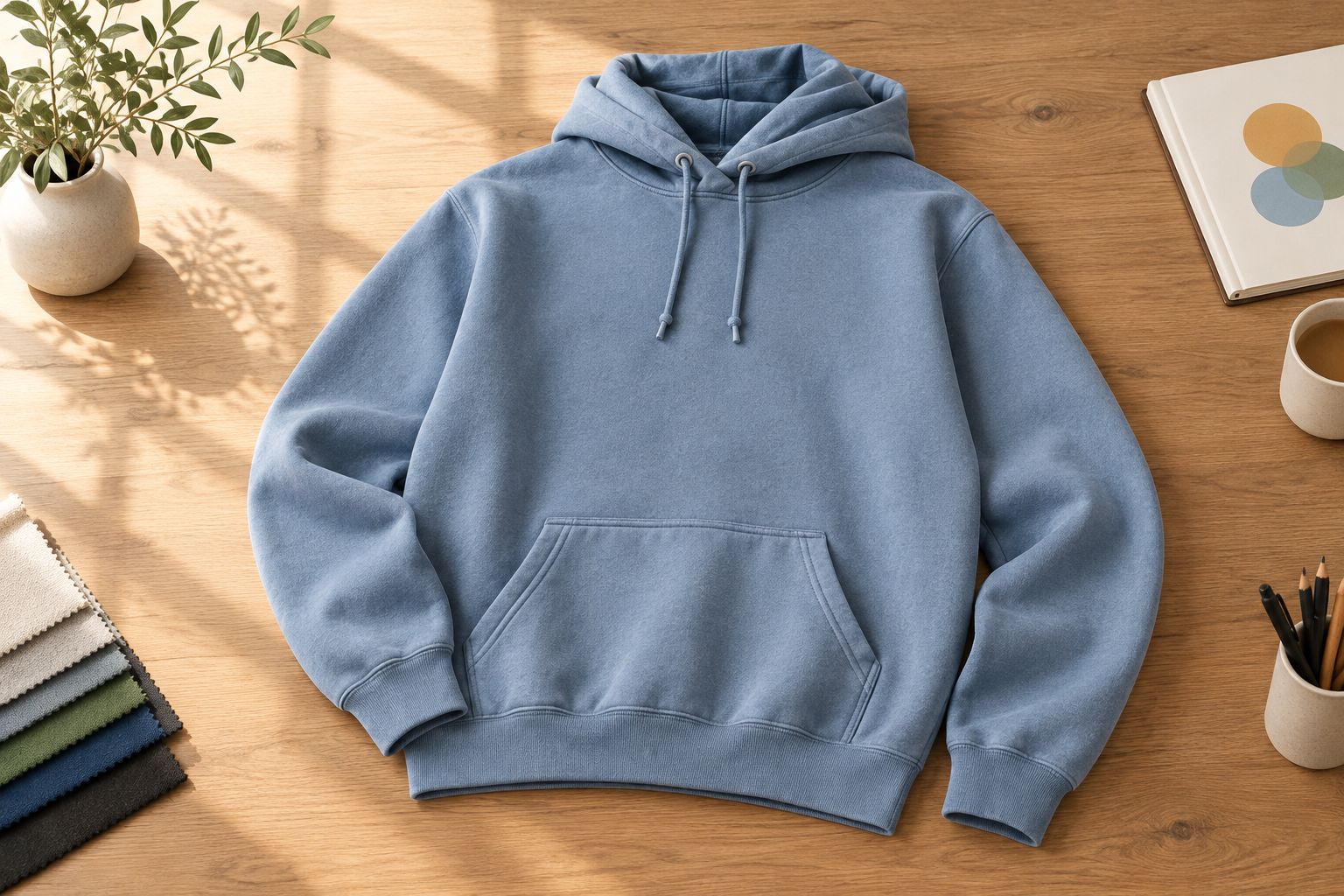
A cotton-face fleece hoodie has cotton at the exterior print surface. That exterior description is different from saying the entire garment is cotton; check the full composition of the specific blank.
For DTF printing, review the actual garment surface and proposed artwork together. Cotton facing alone does not establish compatibility, durability or the result of a particular print.
Cotton-face fleece hoodie pros:
- Makes the exterior fiber a clear selection criterion.
- Lets you evaluate the print surface separately from overall weight.
- Can combine with a pullover or relaxed-fit brief.
Cotton-face fleece hoodie cons:
- Does not describe the whole garment's fiber composition.
- Still requires confirmation for the intended printing process.
Best for: Buyers making the exterior fabric a priority.
Verdict: Hold the selection until the exact blank and printing suitability are confirmed.
6. Relaxed-fit pullover: best for band merch silhouettes
A relaxed-fit pullover puts the garment's shape at the center of the decision. It suits a band merch brief that deliberately calls for roomier proportions rather than a conventional close fit.
Do not substitute sizing up for checking the actual cut. Review chest width, body length and sleeve proportions, then place the artwork on that silhouette rather than copying dimensions from another garment.
Relaxed-fit pullover pros:
- Gives a roomier silhouette when that is the intended look.
- Makes fit part of the band's merch identity.
- Supports an artwork layout designed for wider proportions.
Relaxed-fit pullover cons:
- Does not suit every wearer's fit preference.
- Needs its own size and placement review.
Best for: Bands choosing a deliberately roomy merch garment.
Verdict: Buy relaxed fit when the silhouette is intentional, not accidental.
7. Youth-fit hoodie: best for schools and youth clubs
A youth-fit hoodie is the starting point for a youth apparel brief. Select the garment from its measurements, then review the artwork on the smaller available print area.
For a mixed youth-and-adult order, keep the design consistent without assuming every garment should receive identical print dimensions. Confirm the placement for each relevant garment group before approving production.
Youth-fit hoodie pros:
- Provides youth-specific garment proportions.
- Supports a school or club order planned around its wearers.
- Encourages a separate fit check rather than guessing from adult sizing.
Youth-fit hoodie cons:
- Offers less room for artwork than a larger adult garment.
- Requires additional placement attention in mixed-size orders.
Best for: School groups and youth clubs ordering custom apparel.
Verdict: Buy youth fit after checking measurements and the artwork layout.
How these hoodie types rank
The 2026 ranking follows the criteria above: print surface, usable area, fit, weight, artwork compatibility and ordering requirements. Midweight wins the default position because it avoids committing the undecided buyer to a specialized weight or silhouette.
These are buying recommendations, not laboratory test results. “Best” changes with the brief: a zipper helps staff layering but obstructs a centered front graphic; heavyweight suits a substantial feel but adds bulk.
Turn the hoodie choice into an order
Sixplanets custom hoodie orders use DTF printing, with help available for artwork and larger projects. Bring a clear brief so the garment choice, design preview and final proof address the same outcome.
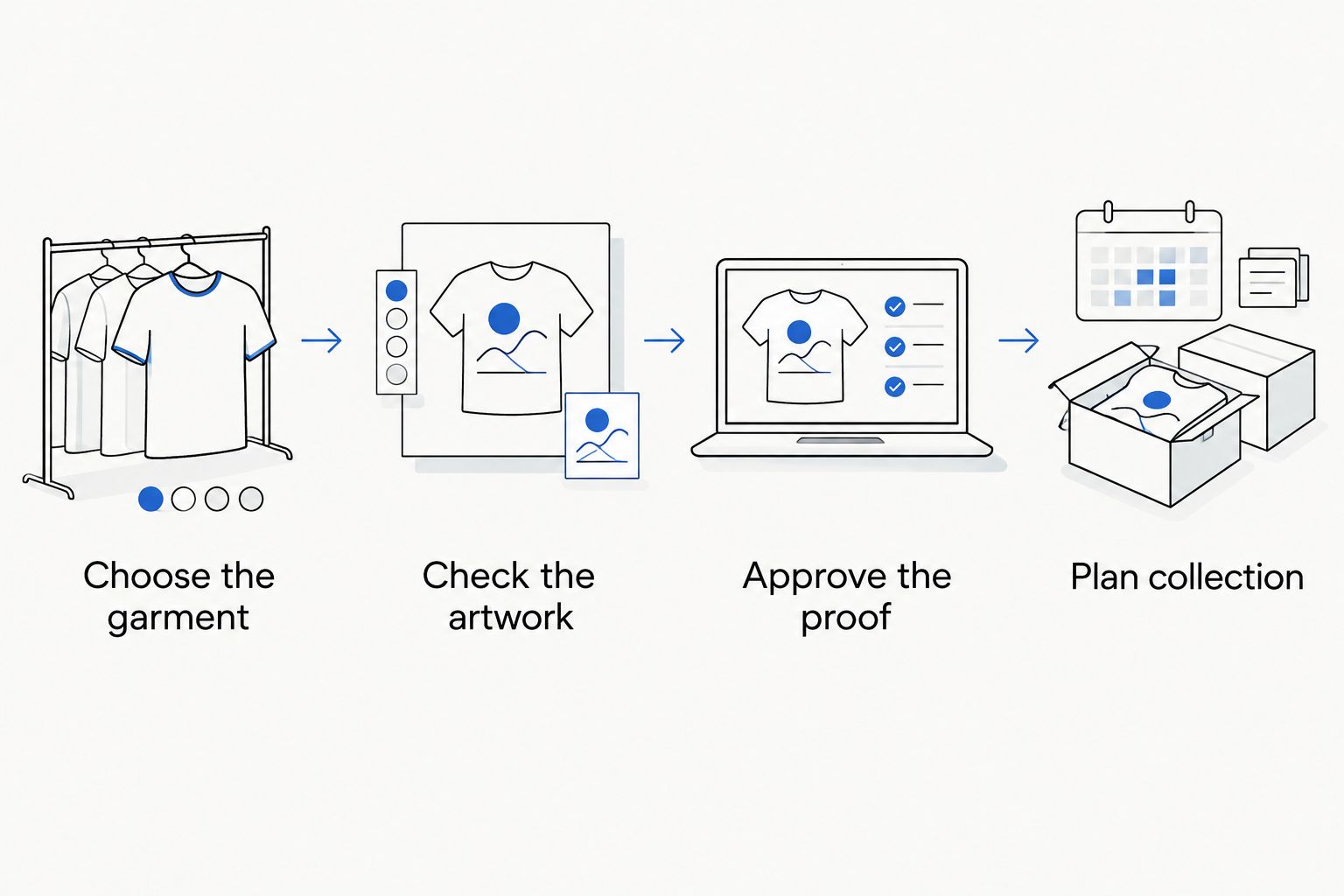
- Choose the garment: State the fit, fabric feel, color and sizes you want.
- Check the artwork: Confirm the design and proposed print location. Ask for help if the artwork needs attention.
- Approve the proof: Review the final artwork proof before authorizing printing.
- Plan collection: Allow 5–7 business days after proof approval, then account for pickup or shipping transit.
For a dated 2026 event, work backward from when the hoodies must be in hand. Local Frisco production includes free pickup; nationwide US shipping requires additional transit time. Do not treat proof review as part of the production window.
No minimums means you can order 1 hoodie before deciding on a larger project. Use that piece to assess fit and placement for yourself; a preview shows the design, while a garment lets you evaluate how it wears.
Start your custom hoodie order
No minimums. Frisco production, final artwork proof approval and free pickup.
Start your orderWhich blank hoodie should you choose?
Choose a midweight pullover if you are undecided. Move to lightweight for lower bulk, heavyweight for substance, zip-front for staff layering or relaxed fit for a deliberate merch silhouette.
For your 2026 order, settle the garment before approving the artwork. Sixplanets custom hoodies combine no-minimum ordering with a design preview, final proof approval and hand inspection. Those checks support a deliberate order; they do not replace choosing the right fit.
FAQ
What's the best blank hoodie for custom printing?
A midweight pullover is the best default for an undecided buyer. It offers an uninterrupted upper-front area without committing you to an especially light or heavy garment; confirm the exact fabric and fit before ordering.
Is a heavyweight hoodie better for custom printing?
A heavyweight hoodie is not automatically better for custom printing. Choose it for a substantial garment feel, then review the actual print surface, artwork and placement separately.
Can I order just one custom hoodie from Sixplanets?
Yes. Sixplanets has no minimum order, so you can order one custom hoodie for a personal design or to assess a garment before a larger project.
Should I choose a pullover or a zip-front hoodie for staff?
Choose a zip-front hoodie when easy layer changes matter most. Choose a pullover when an uninterrupted upper-front graphic is the priority; confirm the proposed placement on either garment.
Does a cotton-face hoodie mean the whole hoodie is cotton?
No. Cotton-face describes the exterior surface, not necessarily the entire garment. Check the exact blank's full fiber composition and suitability for the intended print process.
How long does a custom hoodie order take?
Production takes 5–7 business days after final artwork proof approval. Shipping transit is additional, and free pickup is offered in Frisco; plan the deadline around proof approval rather than the initial inquiry.
Can the same artwork go on youth and adult hoodies?
Use the same design concept, but review its dimensions and placement for each garment group. A layout approved for an adult hoodie does not establish the usable print area on a youth hoodie.
One last thing
Check the back design with the hood down. The hood occupies space over the upper back, so a placement that looks balanced on a flat layout still needs that practical review. Resolve it during proof approval—not after printing.