
THE SIXPLANETS BLOG
Custom aprons for cooking classes and culinary clubs
Choose custom aprons around class fit, pockets, and clear club artwork. Plan proofs, wearer lists, and handover dates before ordering for your culinary club.
By sixplanets · Published About 11 min read
In this guide
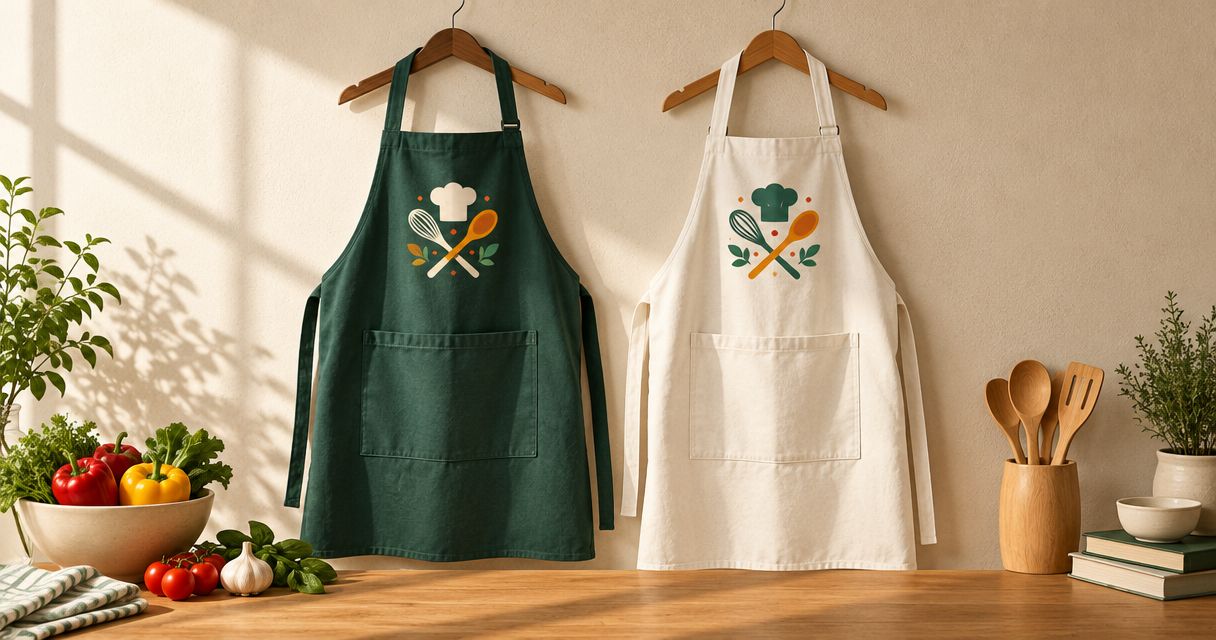
Cooking-class custom aprons are personalized kitchen garments that identify your class or culinary club while providing a layer between everyday clothing and cooking mess. Choose them around the people wearing them, the tasks they perform, and the artwork you need—not just how a logo looks on a flat mockup.
TL;DR- Choose custom aprons for cooking classes by fit, pocket layout, artwork placement, and care instructions—not logo size alone.
- DTF printing requires a compatibility check for the selected apron fabric and construction.
- For Frisco cooking clubs, confirm the apron project before planning around local production or pickup.
- Approve final artwork before printing, and separate production time from shipping transit.
Why custom aprons matter for cooking classes and culinary clubs
A cooking class puts different demands on an apron than a display photo does. Students bend over worktops, reach for utensils, and work around ingredients; your design needs to remain readable without interfering with pockets or adjustments.
For a culinary club, identity matters too. A shared club mark connects the group, while instructor identification helps students find the person leading a demonstration. Decide which job the apron needs to do before choosing its decoration.
For your 2026 class calendar, separate recurring club use from a single workshop. An apron that stays in a shared cupboard needs a different ownership plan from one participants take home. The guide to custom aprons for coffee shops covers another apron-buying situation where fabric and logo placement belong in the same conversation.
Choose the apron around the class first. Fit the design to it second. An apron is not a substitute for the safety clothing or procedures your venue requires.
How to plan your custom apron order
1. Define the class and ownership plan
Start with a written brief. You do not need design software: a shared document can capture the class name, wearer groups, cooking activities, and whether participants keep their aprons.
Be specific about the audience. An adult evening workshop, a youth culinary club, and an instructor team should not automatically share the same fit assumptions. Ask wearers about adjustment needs rather than treating a garment description as a fit guarantee.
For a recurring program in 2026, decide whether to print a date. A dated design marks a particular event; an undated club design avoids tying the apron to that event. Neither approach is automatically better. Choose based on how you intend to use the garments.
Close the brief before requesting artwork. Otherwise, a late decision about take-home ownership can force changes to names, quantities, and the design itself.
- Name the class, club, or event exactly as it should appear.
- Identify students, instructors, and helpers separately.
- Decide whether aprons stay with the organization or go home.
- Record the required handover date and delivery location.
2. Check fit, construction, and care before decoration
Review garment specifications manually before settling on a print. Check the neck adjustment, waist fastening, coverage, pocket arrangement, and manufacturer care instructions. A photo cannot answer all of those questions.
If you can inspect an undecorated sample, have a representative wearer reach forward and bend as they would during class. Check whether the apron shifts and whether the wearer can comfortably use the pockets. Do not assume that one person's fit represents the whole club.
Next, ask the printer to confirm compatibility with the exact fabric and construction. DTF means direct-to-film printing, but naming the process does not establish that every apron is suitable. Seams, pockets, coatings, and garment instructions belong in that check.
Confirm the blank before approving its decoration. Reworking artwork is simpler than discovering that your chosen placement conflicts with a pocket after the order is underway.
- Read the fabric composition and care label.
- Check adjustments against the intended wearers.
- Identify seams, pockets, and fastenings near the print area.
- Confirm who supplies the apron and approves its suitability.
3. Prepare a clear artwork brief
Start with your existing logo file and a plain description of the result you want. Separate the essential elements—such as the club name—from optional details such as a slogan, date, or individual name. A crowded apron is not a better-identified apron.
Ask for a design preview that shows the artwork in relation to the actual garment. Include the intended print dimensions, not just a screen image. State those dimensions in inches so everyone reviews the same physical size.
Sixplanets is a custom DTF apparel print studio in Frisco with no minimum order, premium blanks, artwork help, and hand inspection. Ask Sixplanets to confirm the proposed apron, sourcing arrangement, and print placement before placing an apron order; do not assume that every custom-apparel project uses the same garment options.
Sixplanets custom DTF apparel printing is best for individuals, bands, and creators who need no-minimum orders. For a culinary project, establish the apron-specific details first, then use the studio's design preview and final artwork proof approval process to settle the design before printing.
- Supply the clearest original artwork file you have.
- Separate required wording from optional decoration.
- Specify print width and height in inches.
- Request confirmation of the exact apron and placement.
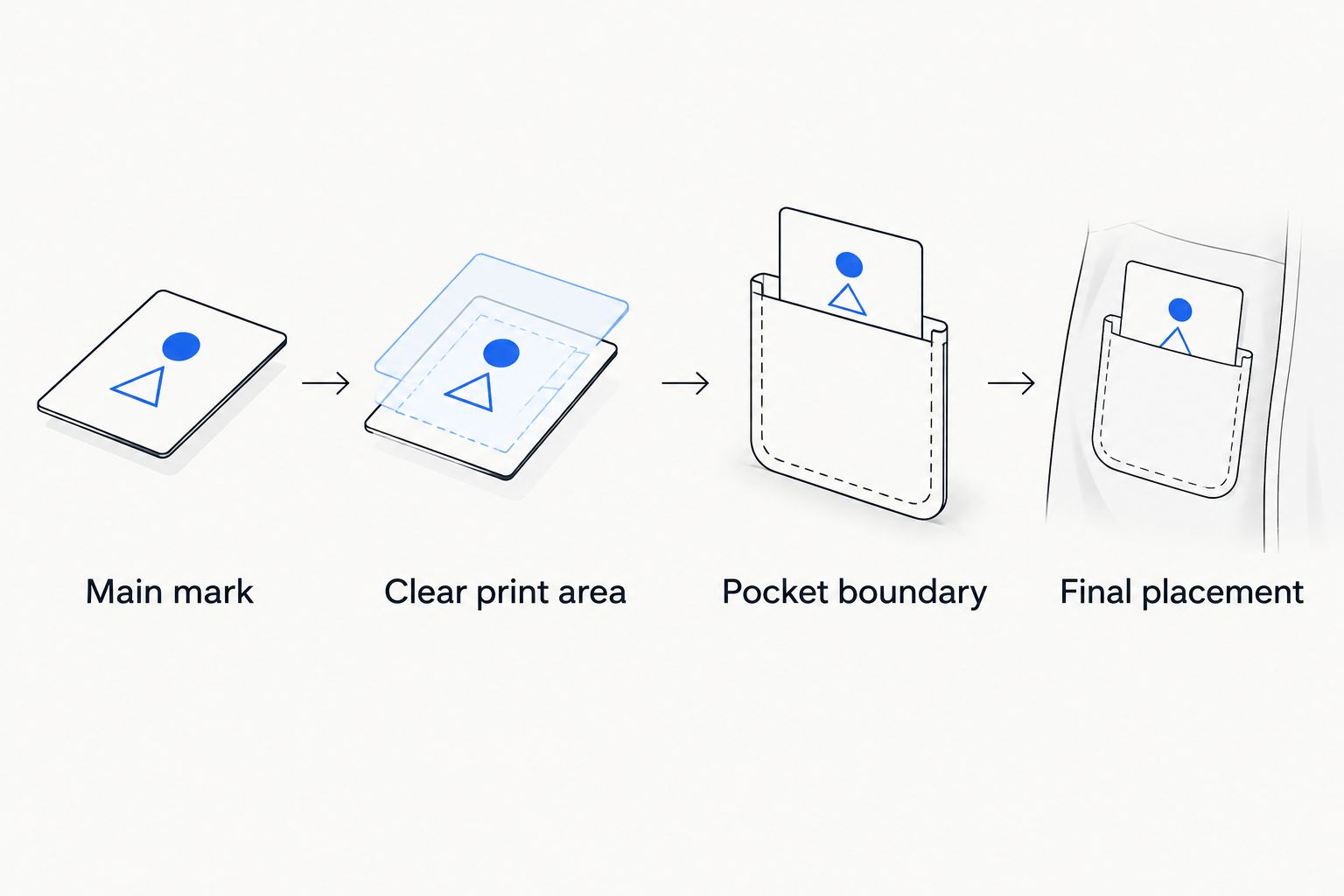
4. Assign artwork to a usable print area
Place a paper version of the design against the apron before approving the layout. This simple check helps you judge whether the lettering feels crowded and whether the design lands near a pocket opening or adjustment point.
Start with the club name or main mark. Add instructor identification only if the class needs it. Individual names introduce another approval task, so decide whether they serve a clear purpose before adding them to every garment.
For a 2026 event design, check whether the year belongs in the artwork or only in event communications. Keeping it off the apron preserves an undated club identity; including it creates an event-specific garment. Make that choice deliberately.
Keep the placement brief short enough that a printer and approver can interpret it the same way. A reference image helps, but written dimensions and positioning instructions should carry the decision.
- Identify the main mark.
- Identify the clear print area.
- Mark the pocket boundary.
- Confirm the final placement.
5. Reconcile quantities and approve the final proof
Build 2 lists: a wearer roster and a garment order sheet. The roster records who needs an apron; the order sheet records what will actually be produced. Compare them before approval, especially when instructors and students have different artwork.
Assign 1 proof owner to collect corrections. That person should reconcile comments rather than forwarding several conflicting versions. School and club approvals become easier to follow when the printer receives a single final decision.
Check wording character by character. Review individual names against the roster, confirm the garment details, and inspect the stated artwork dimensions. A preview shows the proposed design; final proof approval authorizes the artwork you have agreed to print.
Sixplanets requires final artwork proof approval before printing and inspects orders by hand. Your approval still needs to resolve spelling, design choices, and requested placement; hand inspection does not replace those decisions.
- Compare the wearer roster with the garment order sheet.
- Check every name, date, and club abbreviation.
- Resolve all corrections in one final version.
- Keep a copy of the approved proof and order details.
6. Schedule production and choose the handover method
Work backward from the day you need the garments in hand, not just the first class date. Allow room for your own review before proof approval. An unfinished design is not an approved production job.
Sixplanets production is 5–7 business days after proof approval, with shipping transit additional. Production takes place locally in Frisco, and free pickup is offered. Confirm how that schedule applies to the agreed apron project before making an event commitment.
For a Frisco or nearby DFW club, designate a pickup person and a place to hold the order before distribution. For a nationwide US shipping order, confirm the destination and account for transit separately. Neither route justifies assuming same-day or rush service.
Before publishing your 2026 class announcement, settle whether the apron is included, retained by the club, or handled separately. That communication prevents participants from receiving a different expectation from the one your order actually supports.
- Confirm the project details before relying on a production schedule.
- Count production from final artwork proof approval.
- Add shipping transit when the order is not collected.
- Assign responsibility for collection, receipt, and distribution.
Compare apron options for your class
Choose the format according to the job. These are planning options, not a statement that a particular apron model or decoration service is offered. Confirm the garment and printing arrangement before ordering.
| Option | Best for | Main advantage | Key limitation |
|---|---|---|---|
| Shared club design | Best for recurring culinary clubs | Keeps the same identity across the group | Does not distinguish individual wearers |
| Instructor-specific design | Best for classes with designated teaching staff | Makes the teaching role explicit | Requires a separate artwork version to approve |
| Individually named design | Best for aprons assigned to specific members | Makes ownership clear | Adds name checking and complicates reassignment |
| Event-dated design | Best for a particular workshop or celebration | Connects the garment to that event | Ties the design to a date |
| Undated club design | Best for programs that repeat | Avoids a date-specific identity | Does not identify a particular event |
An undated shared design is the practical starting point for a recurring club. Add names or instructor versions only when they solve an ownership or teaching need. That keeps the artwork brief focused without ruling out personalization.
Common mistakes cooking clubs make
Ordering from the logo mockup alone
A clean mockup does not confirm fit, pocket access, or print compatibility. Review the actual apron specifications and garment layout before treating the design as ready. Ask for missing construction details before approval, not after production starts.
Treating every participant as the same wearer
Students, instructors, and helpers do not necessarily need identical identification or adjustment ranges. Record those differences in the brief. Avoid collecting personal details that the garment order does not need.
Adding names without a correction process
Individual names turn a shared design into a set of separate text approvals. Have the designated proof owner check each name against the final roster. Do not ask the printer to resolve contradictory spellings from separate messages.
Counting production from the first inquiry
An inquiry, a design preview, and an approved final proof are different stages. For Sixplanets custom DTF apparel printing, the stated 5–7-business-day production period begins after proof approval, not when you first discuss the project. Shipping transit sits outside that period.
Reusing an old order without checking it
Before repeating a 2026 club design, confirm the roster, garment details, and artwork version again. A familiar logo does not establish that every other detail remains correct. Treat the previous order as a reference, not automatic approval.
FAQ
What's the best custom apron design for a recurring cooking club?
An undated shared club design is a practical starting point for a recurring cooking club. Add individual names or instructor identification only when those details solve a specific ownership or teaching need.
Can I order just one custom apron from Sixplanets?
Confirm the apron project with Sixplanets before ordering. The studio offers no-minimum custom DTF apparel, but the exact apron, sourcing arrangement, and printing compatibility need confirmation.
Can DTF printing be used on any apron?
Do not assume every apron is suitable for DTF printing. Have the printer check the exact fabric, construction, care instructions, and proposed print area before approving the project.
Should culinary students have their names printed on their aprons?
Print student names when aprons belong to individual wearers and clear ownership matters. A shared club design is simpler to reassign when the organization retains the garments.
How long does Sixplanets production take after proof approval?
Sixplanets production takes 5–7 business days after final artwork proof approval, with shipping transit additional. Confirm the agreed apron project's schedule before committing to a class handover date.
Can I pick up a custom apparel order in Frisco?
Sixplanets offers free pickup with local Frisco production. Confirm collection arrangements for your order and designate the person responsible for bringing it to the class.
What should I check before approving a custom apron proof?
Check the wording, names, artwork dimensions, placement, and agreed garment details before approving a custom apron proof. Compare personalized versions against the final wearer roster and resolve corrections in one final approval.
One last thing
Keep your final proof beside the wearer roster, not buried in a message thread. When the next cooking session comes around, those documents tell you what was approved and who received it. Reordering starts with a clear record—not a guess based on a photograph.