
THE SIXPLANETS BLOG
How to choose canvas or linen for custom aprons
Choose custom aprons by fabric weight, weave, care instructions, and logo placement. Compare canvas and linen, then check the exact blank before you order.
By sixplanets · Published About 11 min read
In this guide
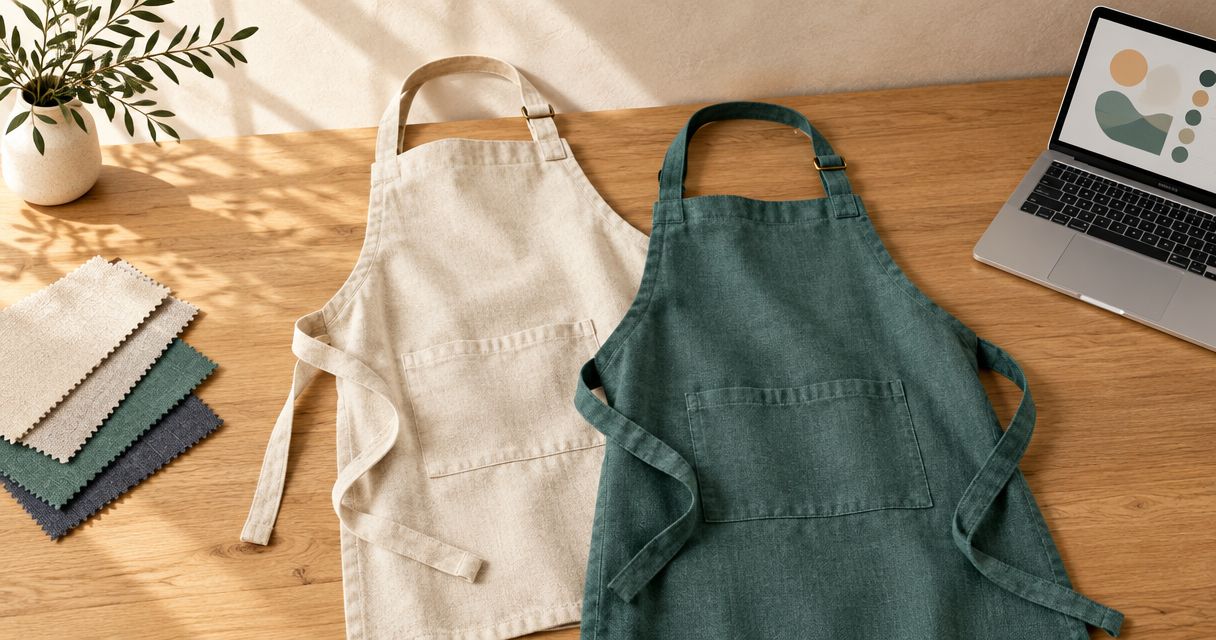
Choose canvas for custom aprons when you want a structured feel; choose linen when you want a more relaxed drape and visible natural texture. Check the actual fabric specification before deciding: canvas describes a weave, while linen describes a fiber. Neither name alone tells you the apron’s weight, wash requirements, or suitability for your logo.
TL;DR- Choose custom aprons by weave, fiber content, fabric weight, and care instructions—not the fabric name alone.
- Canvas suits a structured apron; linen suits a relaxed, textured look. Check the exact blank before ordering.
- Approve logo size and placement on the chosen apron, clear of pockets and seams.
- Sixplanets suits buyers seeking no-minimum custom apparel; confirm the exact apron blank and printing suitability before ordering.
How do you choose canvas or linen for custom aprons?
Start with the job, then compare the actual aprons. A coffee shop uniform, an artist’s workshop apron, and a gift for a home cook have different priorities. Your fabric choice should follow those priorities rather than a label that sounds more substantial or more refined.
For a 2026 custom apron order, compare fiber content, fabric weight, construction, care instructions, and the intended print area. If your project is for a café, the guide to custom aprons for coffee shops connects fabric decisions with logo placement.
| What you’re comparing | Canvas | Linen |
|---|---|---|
| What the name describes | A sturdy plain-weave fabric construction | A fiber made from flax |
| Best for | Buyers seeking a structured apron | Buyers seeking natural texture and a relaxed drape |
| Main advantage | The construction can give the apron body and shape | The fiber gives the fabric its characteristic texture |
| Main limitation | Heavier versions can feel bulky or stiff | Wrinkling is part of the fabric’s behavior |
| What still needs checking | Fiber blend, weight, finish, care, and fit | Weave, weight, blend, care, and fit |
| Printing decision | Confirm the exact blank and decoration method | Confirm the exact blank and decoration method |
These categories overlap. Canvas can be made from different fibers, including linen, and linen fabric comes in different weights and constructions. Compare finished garments, not two names on a mood board.
Why this matters
An apron is clothing you work in. A fabric that looks right in a photograph can still feel wrong when you reach across a counter, bend toward a workbench, or tie it over your usual clothes.
The same applies to decoration. A logo needs a usable print area, not just an attractive fabric color. Choose the garment and artwork together so you do not approve a design that runs into a pocket, seam, or strap attachment.
For your 2026 order, write a short brief before selecting a blank: who wears it, what they do, how it gets washed, and where the logo belongs. Those answers make the fabric decision clearer.
Canvas: best for a structured feel
Canvas is the stronger starting point when your priority is an apron with body. Its plain-weave construction is associated with sturdy fabrics, but the finished result still depends on the fibers, yarns, weight, and finish.
A heavier canvas apron and a lighter canvas apron are not interchangeable. Look beyond the word canvas and ask how the garment feels, bends, and hangs when tied.
Where canvas makes sense
Choose canvas when you want a defined silhouette rather than a loose, flowing drape. It is also a sensible candidate when your brief emphasizes a workwear appearance and you are prepared to assess the actual garment’s weight.
- Best for: Buyers who prefer structure and a workwear look.
- Main benefit: Fabric body can help the apron hold its shape.
- Trade-off: A heavier construction adds fabric weight and can restrict movement if the cut is wrong.
- Before ordering: Check the fiber composition, finish, care label, and fit over normal work clothes.
Do not treat canvas as shorthand for stain resistance, waterproofing, or protective equipment. Those are separate properties that require explicit product specifications. A fabric name does not establish them.
Choose canvas for its structure, not for protection the blank does not claim.
Linen: best for a relaxed, textured look
Linen is the stronger starting point when your priority is visible natural texture and a less rigid appearance. It is made from flax, but the word linen does not tell you whether the finished apron is lightweight, heavyweight, loosely woven, or blended with another fiber.
Wrinkles belong in the decision. If you want a consistently pressed appearance, review the care requirements and decide whether that upkeep fits your routine.
Where linen makes sense
Choose linen when the way the fabric drapes and creases is part of the look you want. Assess an actual garment rather than assuming every linen apron will feel soft, light, or cool.
- Best for: Buyers who welcome natural texture and visible creasing.
- Main benefit: The fabric offers a different surface character from a typical structured canvas.
- Trade-off: Wrinkles can conflict with a sharply pressed uniform brief.
- Before ordering: Check weight, weave, fiber blend, care instructions, and the proposed decoration area.
For a 2026 staff order, ask the people wearing the aprons whether a relaxed finish fits their role. A decision that works for a styled photograph also needs to work through an ordinary shift.
Choose linen because you like its character, not because the name guarantees comfort.
Why custom apron fabric performance varies
The label is only the beginning. These factors explain why aprons carrying the same fabric name can feel and behave differently:
- Fiber content: Cotton, linen, synthetic fibers, and blends do not have identical properties. Read the composition rather than assuming canvas means cotton or linen means an unblended fabric.
- Fabric weight: Weight affects how much material you wear and how the apron hangs. Compare specifications using the same units.
- Weave and finish: Construction and surface treatments affect texture, stiffness, and the surface presented for decoration.
- Garment construction: Coverage, straps, ties, pockets, and seams affect fit and the space available for a logo.
- Care instructions: Washing, drying, and ironing requirements determine whether the apron fits your cleaning routine.
- Decoration compatibility: The specific fabric, finish, and print process need to work together. Confirm that combination before approving production.
If one supplier lists weight in ounces per square yard and another uses grams per square meter, ask for a like-for-like comparison. Do not mistake different measurement units for a meaningful difference between garments.
How do you check an apron before approving the order?
Use the same checks for canvas and linen. Keep the sequence practical: establish the work requirements, inspect the garment, then settle the decoration.
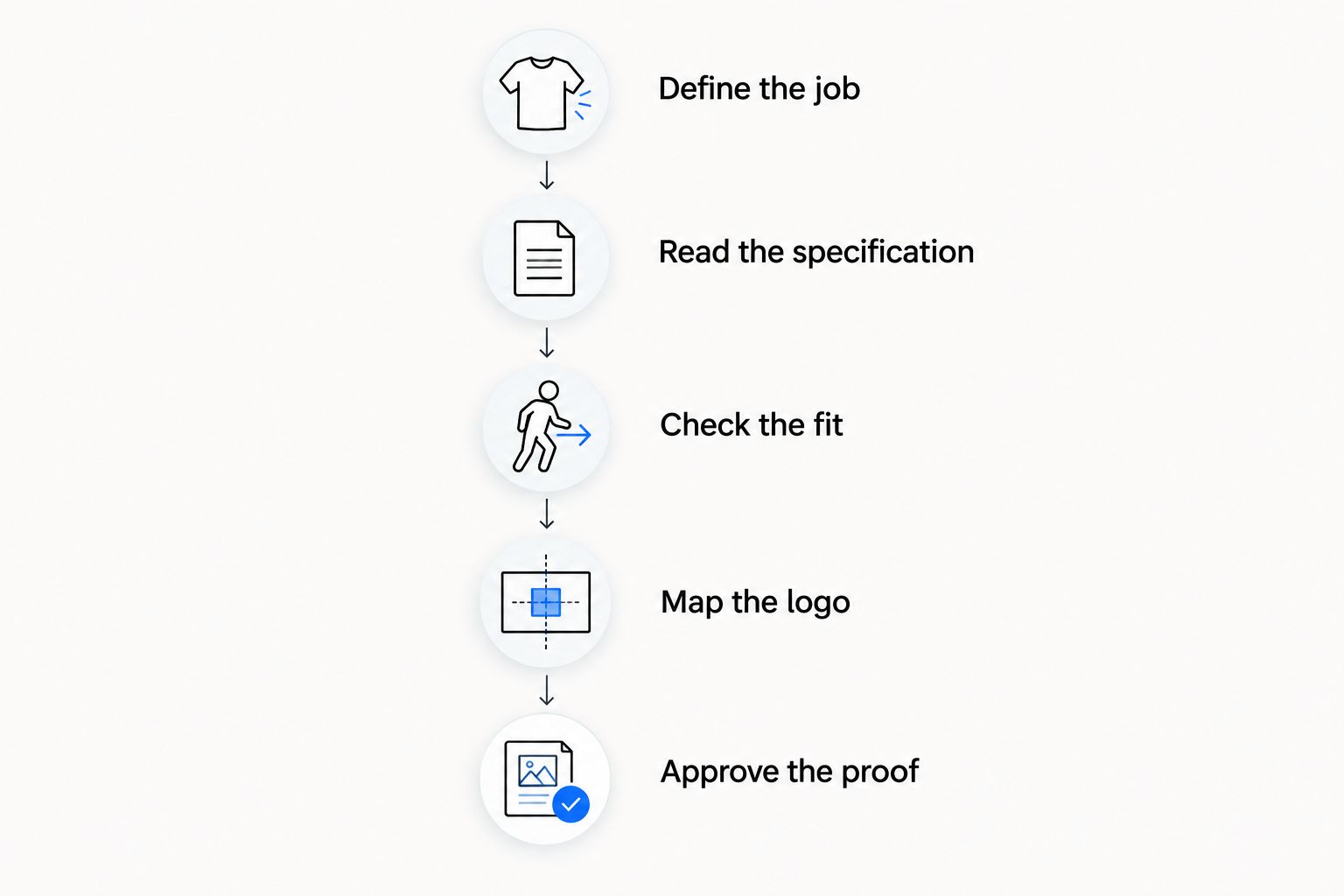
- Define the job. List the movements, coverage, and cleaning requirements that matter. Separate everyday clothing needs from tasks that require certified protective equipment.
- Read the specification. Confirm fiber composition, fabric weight, garment dimensions, and care instructions. Keep those details with your order notes.
- Check the fit. Wear the apron over the clothes you expect to use underneath. Reach, bend, and sit if those movements are part of the job.
- Map the logo. Identify a clear area away from pockets, seams, and strap attachments. Decide the artwork’s dimensions on the garment, not just on a screen.
- Approve the proof. Review the final artwork, placement, garment choice, and order details before printing begins.
Keep a copy of the approved specification and proof for your 2026 order. That record gives you something concrete to reference when discussing a future reorder; a remembered fabric name does not.
How should you place a logo on canvas or linen?
Choose a clear print area before choosing the final logo size. A centered design is not automatically usable if a pocket interrupts it or the apron folds through it when worn.
Check placement on the apron as a garment, not as a flat rectangle. Ties, body shape, pocket contents, and movement can change how the design sits.
Check the surface
Look at the fabric’s texture where the artwork will go. Small lettering and fine detail need specific attention on a textured surface. Ask the decorator to confirm whether the artwork and the exact blank suit the intended printing method.
Do not assume every canvas or linen apron accepts the same process. Fiber content and surface finishes matter, and a familiar printing method on a t-shirt is not automatic approval for a different garment.
Check the worn position
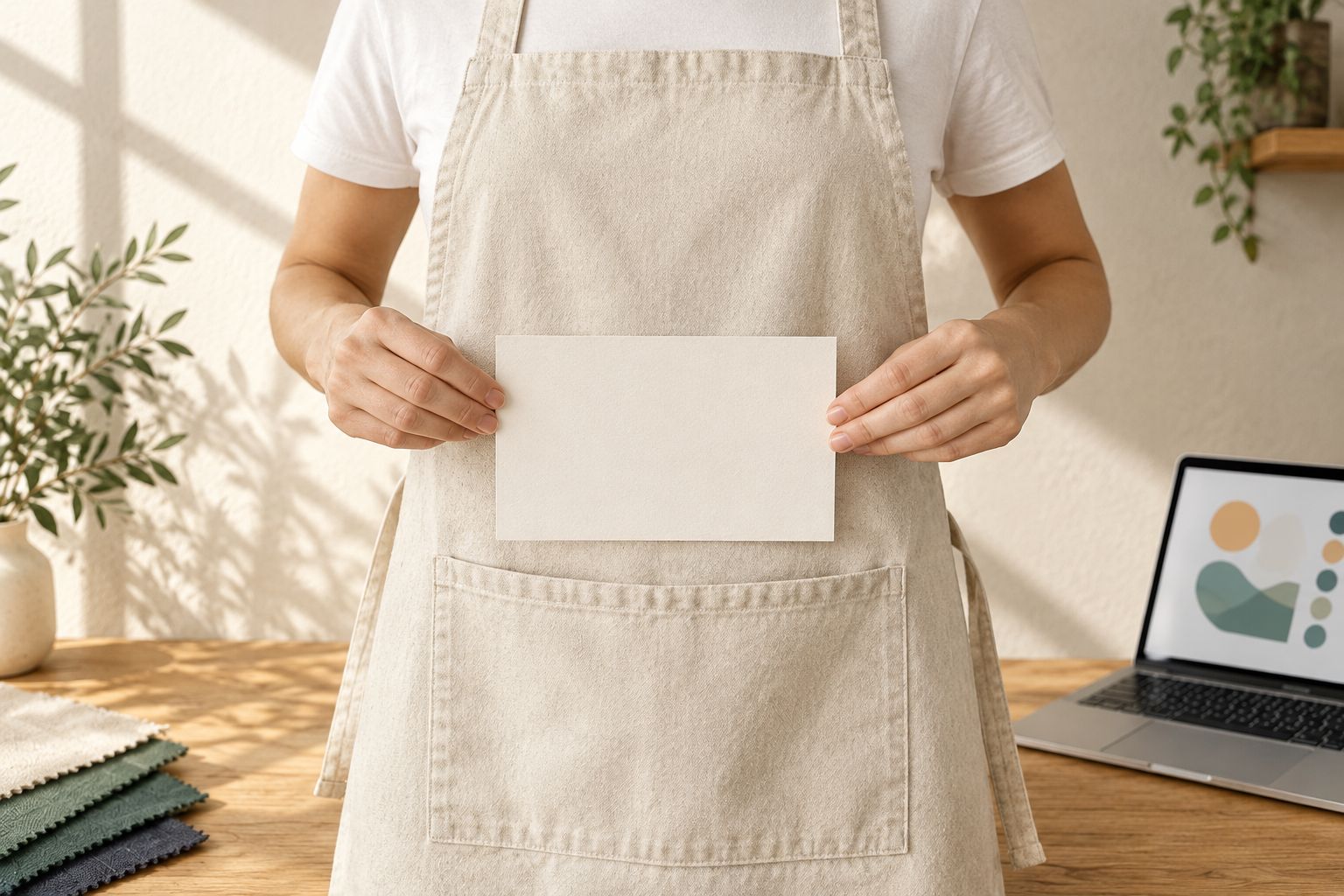
Hold a paper version of the artwork against the apron while someone wears it. Keep it clear of pocket openings and check how it sits when the wearer reaches forward.
This is a placement check, not a print test. It helps you judge scale and position; it does not establish adhesion, wash performance, or color accuracy.
A digital proof serves a different purpose. Review the spelling, artwork version, scale, and placement carefully, then resolve questions before giving final approval.
Can you coordinate aprons with other custom staff apparel?
Yes. Start with a shared artwork file and decide how it needs to fit each garment’s usable print area. The same logo does not need the same dimensions on an apron and a t-shirt.
Sixplanets is best for individuals, bands, creators, and teams seeking no-minimum custom apparel. The Frisco studio offers DTF-printed t-shirts, hoodies, long sleeves, headwear, and tote bags. For an apron project, confirm the exact blank and printing suitability before placing an order.
For a coordinated apparel order, Sixplanets offers premium blanks, a design preview, final artwork proof approval before printing, and hand inspection. Help is available with artwork and larger projects.
Sixplanets production takes 5–7 business days after proof approval. Free pickup is available in Frisco, and US shipping transit is additional. For a DFW team planning a 2026 event, distinguish the date you need finished garments from the date you approve the proof.
Plan your custom apparel order
No minimums. Frisco production, final artwork proof approval, and free local pickup.
Explore custom apparelIs canvas always better than linen for work aprons?
No. Canvas is the better starting point for structure, while linen is the better starting point for a relaxed, textured appearance. The exact garment’s weight, fit, care requirements, and construction determine whether it suits your work.
Does linen mean an apron will be lightweight?
No. Linen identifies the fiber, not the finished fabric’s weight. Check the listed fabric weight and assess the actual garment before choosing it for a warm workspace or a long shift.
Should you choose the apron or the logo first?
Choose the apron before finalizing the logo’s size and placement. Keep your original artwork, but adapt its presentation to the garment’s clear print area and the decorator’s requirements.
FAQ
What’s the best fabric for custom aprons?
The best fabric for custom aprons depends on the job: start with canvas for structure or linen for a relaxed, textured look. Confirm the exact garment’s fiber content, weight, fit, care instructions, and decoration compatibility before ordering.
Is canvas the same thing as cotton?
Canvas is not the same thing as cotton. Canvas describes a fabric construction, while cotton describes a fiber; check the composition of the specific apron.
Will a linen apron wrinkle?
Linen wrinkles, so visible creasing belongs in your buying decision. Check the garment’s care label and decide whether its maintenance requirements fit your routine.
Can a logo be printed on any canvas or linen apron?
A fabric name alone does not establish printing compatibility. Ask the decorator to confirm the exact blank, its finish, the artwork, and the intended printing method before production.
Are canvas aprons waterproof or heat protective?
Canvas alone does not establish waterproofing or heat protection. Choose task-appropriate protective equipment where required, and rely on explicit product specifications rather than the fabric name.
When does Sixplanets production start?
Sixplanets production takes 5–7 business days after proof approval. Shipping transit is additional, and free pickup is available in Frisco.
What should I check on my final artwork proof?
Check the artwork version, spelling, size, placement, and garment details before approving your proof. Resolve questions before printing begins rather than treating the proof as a draft.
One last thing
Your shortlist does not have to be canvas versus linen: an apron can be both. Canvas identifies construction; linen identifies fiber. Ask for the full specification, then choose the garment that fits your work and your artwork.