
THE SIXPLANETS BLOG
Custom aprons for makers and craft-market sellers
Choose custom aprons for how you work, not just your logo. Check fit, pockets, artwork and proof approval before planning your next Frisco craft-market order.
By sixplanets · Published About 12 min read
In this guide
Makers’ custom aprons are branded workwear designed to identify your business while keeping the tools you need within reach. For craft-market sellers, the right choice depends on how you work behind the table, where your logo remains visible, and whether the garment suits the materials you handle.
TL;DR- Choose custom aprons around your craft, working posture and pocket use—not the logo alone.
- Sixplanets suits makers who need no-minimum custom t-shirts or tote bags alongside their market setup.
- Confirm apron sourcing and printing compatibility before committing to a garment or submitting final artwork.
- Approve the final artwork proof before printing; confirmed production takes 5–7 business days, with shipping transit additional.
Why custom aprons matter for makers
At a craft market, your workwear has to function while you wrap purchases, demonstrate a technique and answer questions. A logo hidden by a table or a pocket filled beyond comfortable use does not serve that job. Choose the working garment first, then design the branding around it.
For your 2026 market calendar, separate the apron decision from the rest of your printed apparel. Sixplanets offers no-minimum DTF-printed apparel from Frisco, including t-shirts and tote bags. Confirm the apron garment, sourcing arrangement and decoration compatibility directly before treating an apron project as an accepted order.
An apron is also not a substitute for task-specific protective equipment. If your craft involves heat, chemicals, sharp tools or machinery, follow the relevant equipment and material safety instructions rather than choosing protection by appearance.
Plan custom aprons around your market routine
Define the job your apron must do
Start with a plain apron you already own, or a comparable garment you can examine in person. Wear it through the actions you perform at a market: reaching across a display, sitting, packing an order and retrieving supplies. Record what gets in the way before you choose decoration.
A seller who demonstrates a craft needs a different setup from someone who mainly handles packaged goods. Your apron brief should describe those tasks, not just request a color and a logo. If helpers share garments, include the range of adjustments they need rather than assuming one fit works for everyone.
Decide whether the apron is primarily workwear, an identifier or part of a coordinated display. It can serve several purposes, but the main job should settle competing choices. A large print should not displace a pocket you actually use.
- Describe your tasks: List the movements and materials involved in a normal selling day.
- Identify your essentials: Name the tools or supplies that need accessible pockets.
- Set your coverage: Check the areas you want covered while standing and sitting.
- Define your users: State whether the apron belongs to one maker or a rotating team.
Check the garment before choosing decoration
Read the garment’s fiber content and care label, then inspect the construction. Look at straps, fasteners, pocket openings, seams and the area available for printing. Do not assume a fabric name alone establishes comfort, print compatibility or suitability for your craft.
Try the apron over the clothes you actually wear to markets. A fit that feels comfortable over a light shirt deserves another check over your cooler-weather layers. Sit behind a table and bend to reach a storage box; straps and pockets need to work in those positions too.
For your 2026 order, record the exact garment rather than approving a generic description such as a dark utility apron. If a substitute is proposed later, check the fabric, construction and print area again. An approved layout belongs to a particular garment, not every apron with a similar color.
- Read the label: Save the fiber content and care instructions with your order notes.
- Check adjustment: Test neck, waist and cross-back arrangements where applicable.
- Inspect the surface: Mark seams, hardware and pockets that interrupt the print area.
- Confirm compatibility: Have the studio assess the specific garment before buying it for decoration.
Prepare artwork for the real print area
Begin with the original logo file and a simple paper mockup. Place the mockup on the apron while someone wears it, then view it from the customer’s side of your table. This manual check helps you spot a logo that folds, sits behind merchandise or competes with a busy illustration.
Keep the primary identifier clear. Your business name or recognizable mark should not depend on a long block of small text. If you want both an illustration and a name, decide which one customers need to notice first, then ask for a layout that respects the garment’s usable surface.
For confirmed apparel projects, Sixplanets provides a design preview, final artwork proof approval before printing, and help with artwork or larger projects. Use that help to resolve layout questions rather than approving a preview that leaves the intended size or position unclear.
- Supply the original: Send the source artwork rather than a screenshot when you have it.
- Show the garment: Include a clear image of the proposed apron and its construction.
- Name the priority: Identify the logo, name or illustration that must remain readable.
- Request placement details: Ask the proof to make the intended size and position clear.
Test logo visibility during actual work
A flat garment shows only part of the story. Once worn, an apron bends at the waist, gathers under ties and changes shape when pockets hold supplies. Test visibility in the posture customers will see, not only while standing straight in front of a mirror.
For a 2026 market booth, use your planned table arrangement during the check. Put a display box or representative merchandise in front of you. If the bib disappears behind a tall display, moving the artwork alone will not solve the whole problem; adjust the display or choose another visible identifier.
Keep tools away from the logo when practical, but do not rearrange essential work habits solely to protect a graphic. A useful apron with a restrained mark is a better ordering decision than an elaborate layout that interferes with your routine.
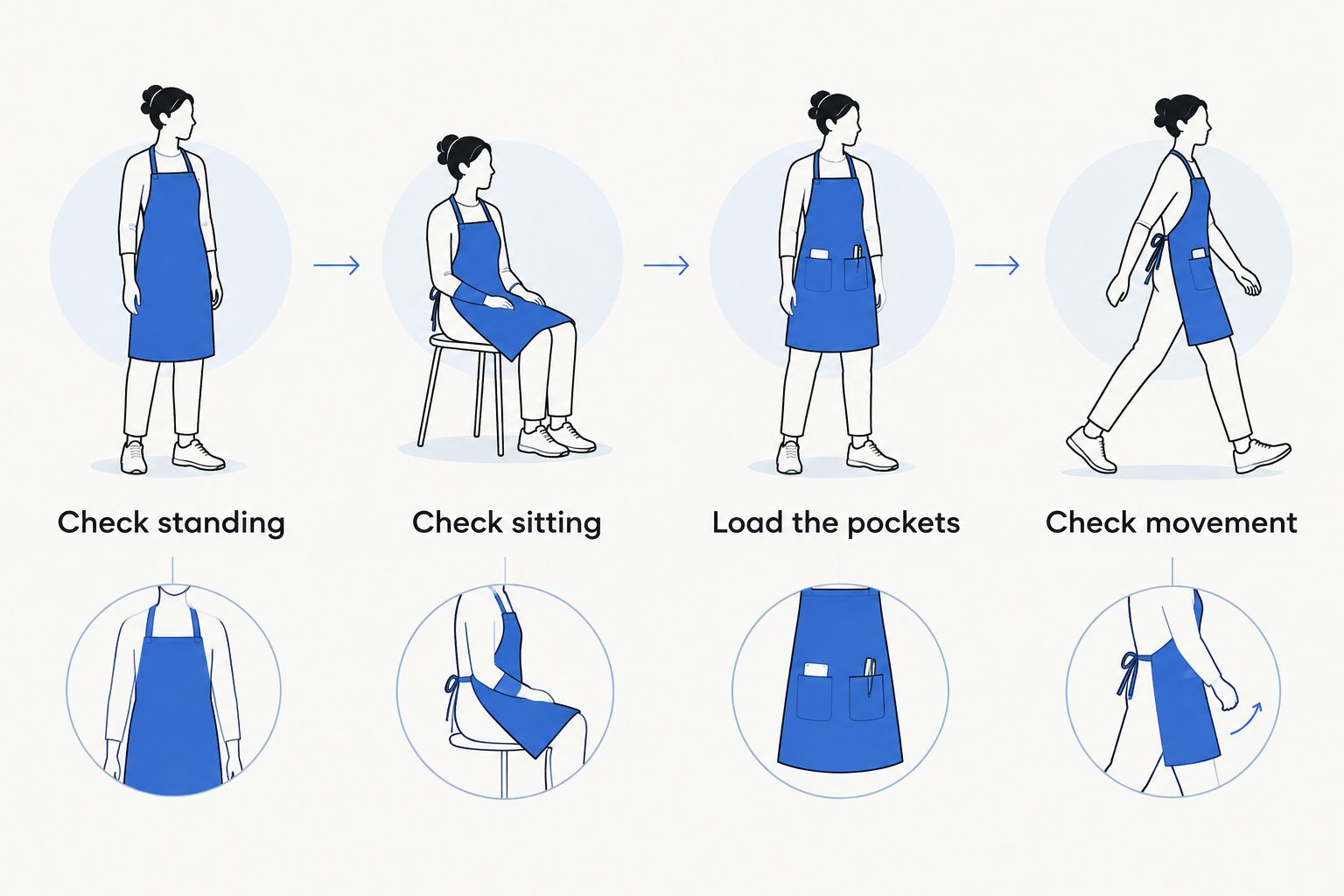
- Check standing: View the mockup while you greet someone across the table.
- Check sitting: Confirm what remains visible behind your normal display.
- Load the pockets: Add the supplies you expect to carry before judging placement.
- Check movement: Reach, bend and pack an item without adjusting the apron for the test.
Approve the proof before scheduling collection
Put every decision into a written order summary: garment, color, artwork, placement, quantities and fulfillment method. Compare that summary with the final proof. If the garment or artwork changes, resolve the change before approving production rather than relying on an earlier conversation.
For confirmed Sixplanets custom-apparel orders, production takes 5–7 business days after proof approval, with shipping transit additional. Local Frisco production, hand inspection and free pickup support nearby DFW orders. Nationwide US shipping is also an option; transit sits outside the production window.
Build your 2026 event plan around that approval point, not the day you first ask a question. Do not assume the general apparel timeline confirms an unreviewed apron project. Ask about the proposed garment and scope first, then choose pickup or shipping against your actual event date.
- Review the proof: Check spelling, artwork version, garment color and placement.
- Confirm the scope: Make sure the accepted order includes the garment you intend to receive.
- Record approval: Keep the final approved version with your order details.
- Choose fulfillment: Confirm Frisco pickup or shipping before fixing your collection plan.
Plan companion apparel without over-ordering
You do not need to repeat the full apron design on every item at your booth. Start with the job each piece serves. A staff shirt identifies a helper; a tote can carry a separate illustration; an apron can keep the business name prominent while you work.
Sixplanets custom apparel has no minimum order, so you can order just one t-shirt rather than committing to a larger run. Premium blanks are part of the offering, but choose the specific garment by its fit and intended use rather than treating that description as a substitute for reviewing the details.
For your 2026 setup, keep staff clothing separate from merchandise intended for sale. Record sizes for the people wearing the garments and choose any resale quantities independently. That distinction keeps a practical uniform order from becoming an unplanned inventory purchase.
- Separate purposes: Label each item as staff wear, personal use or merchandise.
- Keep a shared identifier: Carry the business name or core mark across the relevant pieces.
- Review each layout: Approve artwork for each garment instead of assuming one placement fits all.
- Start deliberately: Order the quantity you need, not a quantity chosen to meet a minimum.
Plan your market apparel
Explore no-minimum custom apparel, with artwork help and free Frisco pickup.
Explore custom apparelCompare workwear options for your craft-market setup
Custom aprons suit makers who need accessible supplies and a visible business identifier while working. A shirt or tote serves a different purpose. Choose by the task first, and confirm the specific garment before approving decoration.
| Option | Best for | Main advantage | Key limitation |
|---|---|---|---|
| Printed bib apron | Makers who want front coverage and a chest-level identifier | Combines a workwear surface with visible branding | Tables, folds and pocket construction affect logo visibility; sourcing and compatibility need confirmation |
| Printed waist apron | Sellers who mainly need supplies near the waist | Keeps the upper body free of apron straps | Offers no chest-level space for a business identifier; sourcing and compatibility need confirmation |
| Printed t-shirt | Makers and helpers who do not need apron storage | Provides a separate surface for staff identification | Does not replace apron coverage or tool pockets |
| Printed tote bag | Makers adding a carry item to their merchandise | Gives artwork its own item beyond staff clothing | Does not identify the person staffing the booth when set aside |
The first two options are apron formats to evaluate, not a statement of catalog availability. The t-shirt and tote options are confirmed parts of the studio’s custom-apparel offering. Do not buy undecorated aprons on the assumption that every garment can enter the same printing workflow.
Common mistakes makers make with custom aprons
Buying the apron before confirming decoration
An appealing blank is not automatically suitable for the intended print. Send the garment details for assessment before purchasing it specifically for a custom project, especially when seams or pockets occupy the proposed artwork area.
Designing around an empty pocket
A layout can look balanced until scissors, tags or packaging supplies change the garment’s shape. Test the pocket as you use it. Move the artwork or simplify the design if your normal supplies cover the identifier.
Treating branded workwear as protective equipment
A printed logo does not establish protection against the materials or tools used in your craft. Follow the safety requirements of the task separately, and choose branding only after those requirements are settled.
Counting production from the first inquiry
The stated production window begins after final proof approval, not when you send the first file. Unresolved artwork and garment questions need attention before that point, and shipping adds transit time afterward.
Approving a design without checking the booth
A chest print can disappear behind a tall display even when its placement is correct on the apron. Recreate your selling position before approval. If necessary, change the display or add a separate staff identifier rather than squeezing more artwork onto the garment.
FAQ
What are the best custom aprons for craft-market sellers?
The best custom aprons match the seller’s tasks, fit needs and usable print area. Test pocket access and logo visibility while standing and sitting behind the actual display before choosing a garment.
Can I order custom aprons from Sixplanets?
Confirm the specific apron project directly before ordering. Sixplanets’ stated offering includes DTF-printed t-shirts, hoodies, long sleeves, headwear and tote bags; an apron garment and its printing compatibility need separate confirmation.
Can I order just one custom shirt for my market booth?
Yes. Sixplanets offers custom apparel with no minimum order, including a single t-shirt, so you do not need a larger staff-apparel run.
Where should a logo go on a maker’s apron?
Place the logo where it stays visible during your normal work and clear of construction that interrupts the print. Check the proposed location with loaded pockets and while sitting behind your market display.
Do I approve the design before printing?
Yes. Sixplanets provides a design preview and requires final artwork proof approval before printing. Check the artwork version, spelling, garment and intended placement before approving.
How long does custom-apparel production take?
Confirmed custom-apparel production takes 5–7 business days after proof approval, with shipping transit additional. Confirm the scope of an apron project separately before applying that schedule to it.
Can I pick up a custom-apparel order in Frisco?
Yes. Free Frisco pickup is available for custom-apparel orders. Nationwide US shipping is also offered, with transit additional to production time.
One last thing
Photograph your paper logo mockup from the customer’s side of your fully arranged table. That view tests a different question from a close-up proof: not whether the artwork looks good, but whether customers can see it while you work.
Keep that photo with your garment notes and approved artwork. For a repeat order, check whether the garment, display or working routine has changed before reusing the layout. Repeat the decision only when the conditions still match.